

Braunschweig (18 February 2026). Economic development in Germany is currently sluggish. After two years of recession, the economy grew by a meagre 0.2 per cent in 2025. This is shown by current data from the Federal Statistical Office. The manufacturing sector is particularly affected as a result of technological change, changes in global markets and high energy prices. The manufacturing sector is under considerable pressure and is cutting jobs.
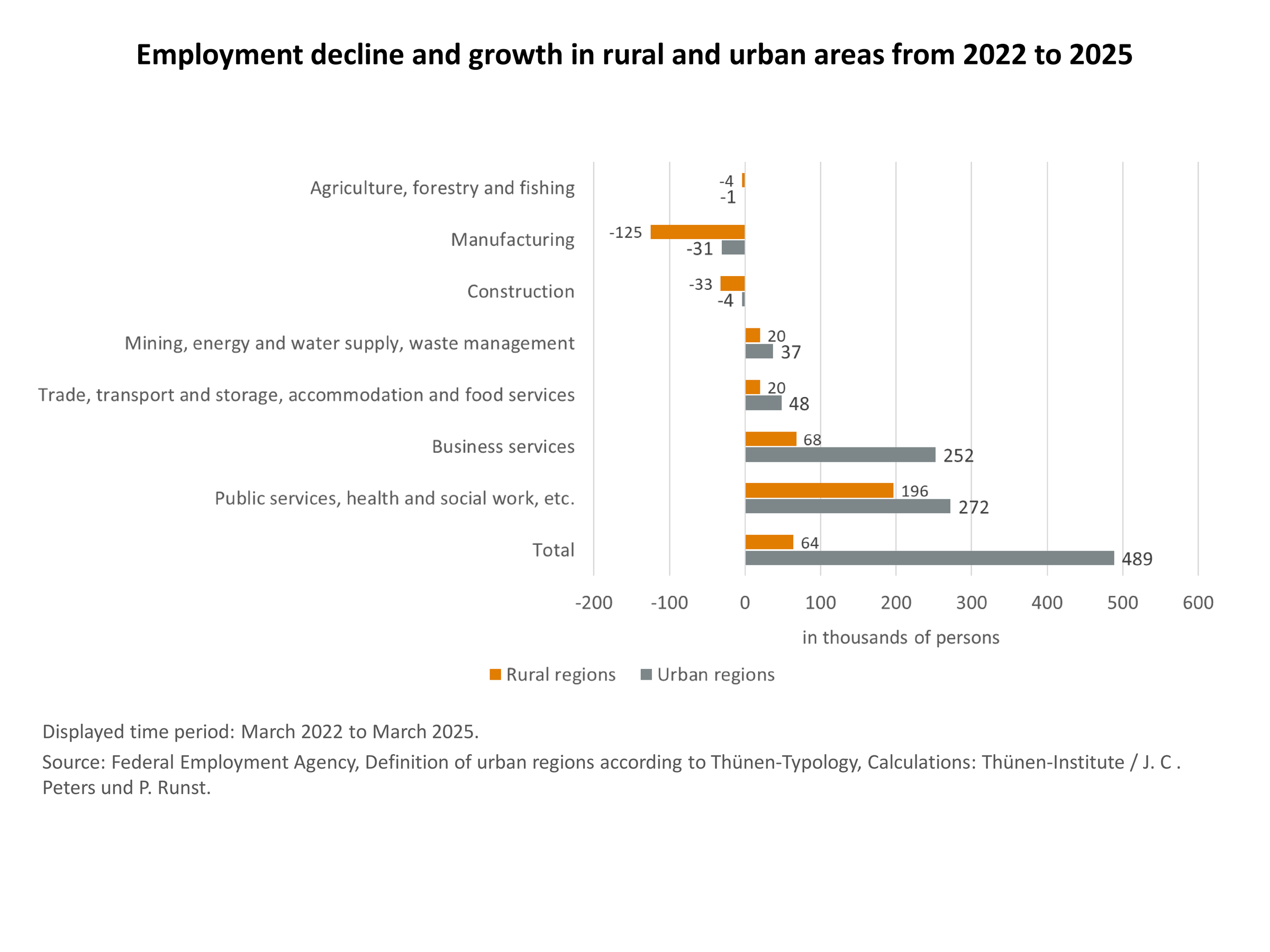
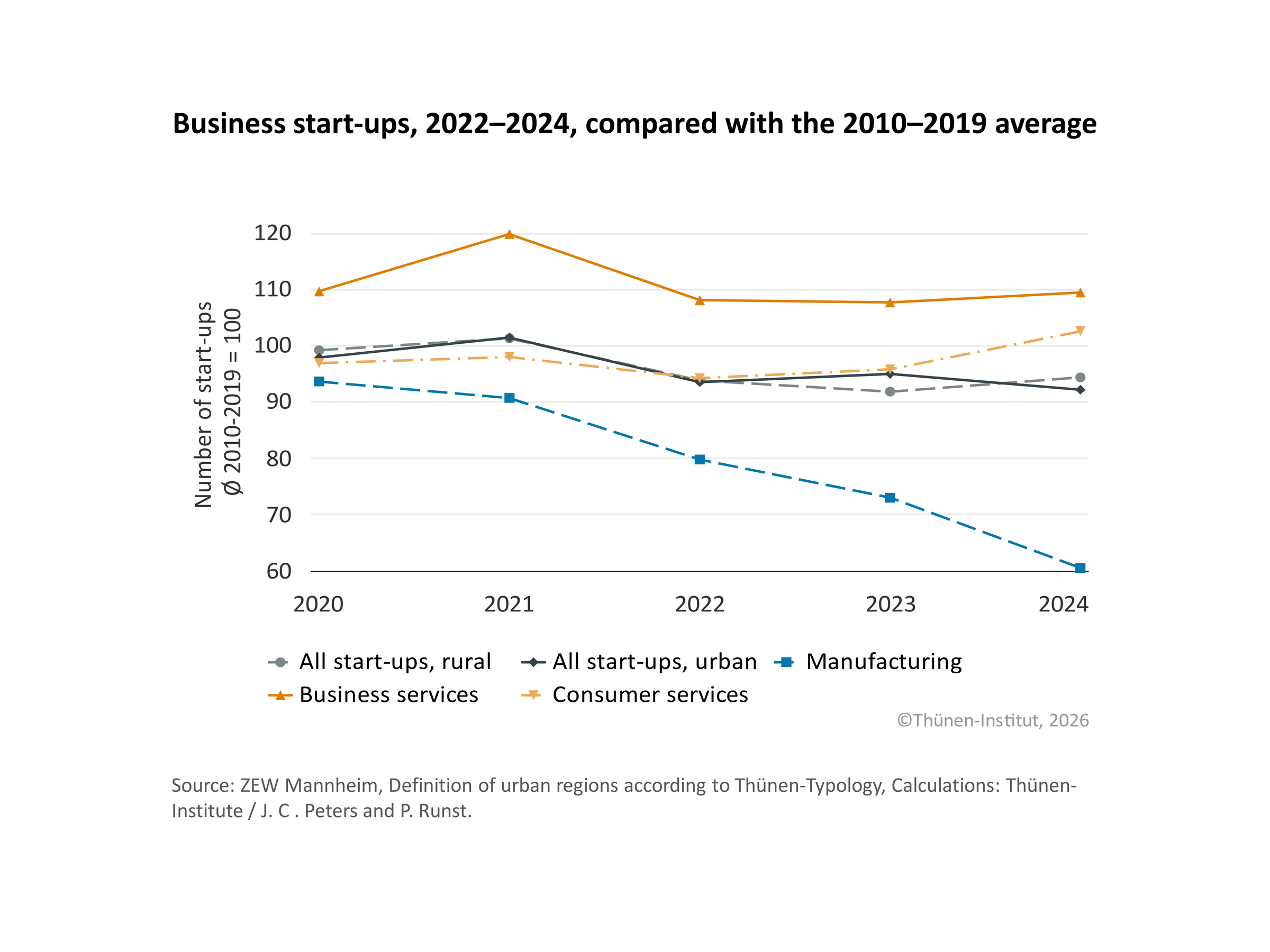
Current analyses by the Thünen Institute of Innovation and Value Creation in Rural Areas now show that 80 per cent of job losses in the manufacturing sector are occurring in rural areas. Nationwide, the number of people employed in this economic sector fell by almost 156,000 between March 2022 and March 2025. 125,000 of these jobs were cut by companies in rural areas. At the same time, unemployment is rising almost everywhere and the number of new businesse start-ups remains low.
There are two reasons why rural areas are particularly affected: firstly, more than a quarter of all employees in the manufacturing sector work there. In contrast, less than 14 per cent of workers in urban areas are employed in this sector. Urban areas specialise primarily in services, which, unlike manufacturing, continue to grow in terms of employment throughout Germany. Secondly, the percentage decline in manufacturing employment is even more pronounced in rural areas than in urban areas: between March 2024 and March 2025, more than 2.6 per cent of jobs were lost in rural areas in the metal, electrical and steel industries and in the manufacture of other intermediate goods (especially chemical products and plastic goods). In urban areas, the percentage decline was around two per cent. The analysis makes it clear that many rural regions are at risk of losing their economic base if the manufacturing sector does not succeed in economic renewal. Economic policy reforms should also provide an incentive for higher investment than before.