It is far more than a culinary delicacy – the European flat oyster (Ostrea edulis) is considered as an “engineer of the seas.” By forming reefs, it improves water quality, creates complex habitats, and promotes marine biodiversity. In a joint project by the Thünen Institute, the Alfred Wegener Institute (AWI), and the Federal Agency for Nature Conservation (BfN), the goal is to re-establish oysters in the German North Sea by 2034.
Fish, crabs, mussels – all find refuge, food, or spawning grounds in oyster beds. These biodiversity oases also provide a range of ecosystem services, such as stabilizing sediments and mitigating algal blooms.
Once widespread in the North Sea, the European flat oyster has almost completely disappeared due to overexploitation. With its disappearance, an entire habitat fell out of balance – with direct consequences for the resilience of coastal ecosystems. A large-scale project now aims to revive reefs by 2034.
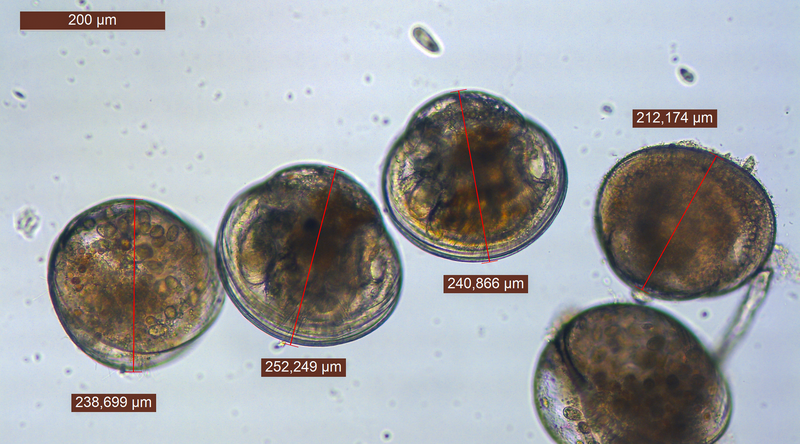
However, reintroducing a species that has vanished is no simple task. One of the greatest challenges lies in obtaining suitable oyster seed (juveniles). “The seed must not only be available in sufficient numbers, but also be healthy, genetically diverse, and above all ready to colonize new reefs,” explains Bérenger Colsoul of the Thünen Institute of Fisheries Ecology. “Without this foundation, sustainable habitat restoration is impossible,” says the scientist, who is leading the Thünen Institute’s contribution to the project “Integrative measures for restoring intact reef systems of the European flat oyster in a multi-species approach.”
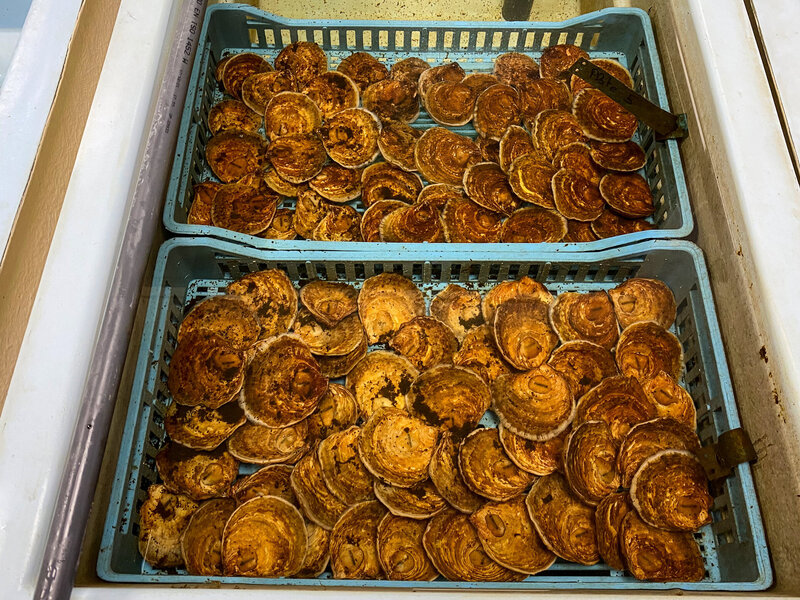
Within the project partnership, the Thünen Institute plays a key role: at one of the most modern aquaculture facilities in Europe, breeding and controlled reproduction techniques for the European flat oyster are being tested and optimized. From broodstock maintenance to microalgae cultivation, larval rearing, and settlement on shells (spat-on-shell), the researchers are establishing a complete production chain. The goal is to ensure a reliable supply of juveniles to support restoration projects, particularly along the German North Sea coast.
“This is about more than reintroducing a vanished species,” says Bérenger Colsoul. “We want to build living marine ecosystems that are vital for biodiversity, improve water quality, and ultimately strengthen the resilience of our oceans.”