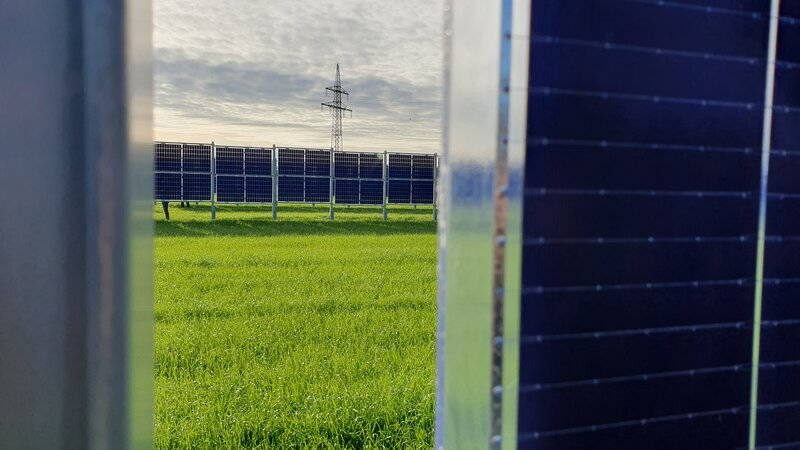
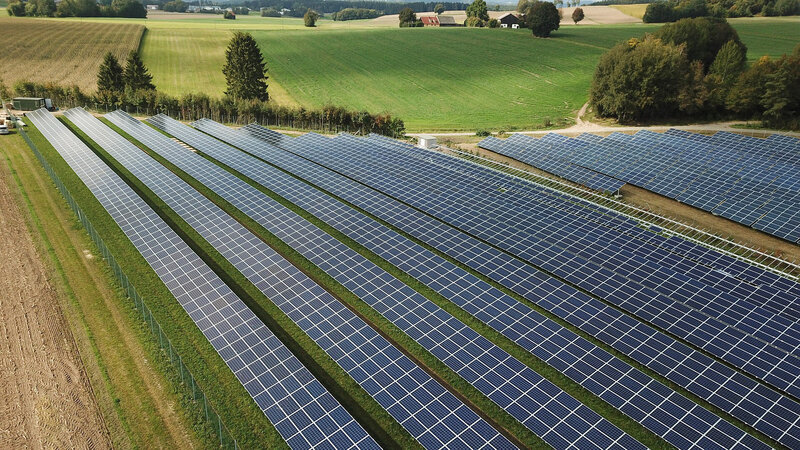
More and more photovoltaic systems are being built on Germany's open spaces – leading to land-use conflicts with agriculture. Agri-photovoltaics is considered a possible solution, as electricity and food can be produced simultaneously on the same land. Thünen researchers are now showing the costs of agri-photovoltaic systems compared to conventional photovoltaic systems on open spaces. Their conclusion: the combined use of agricultural land makes electricity generation significantly more expensive.
This is mainly because the solar modules in agri-photovoltaic systems are further apart. This means that less electricity is generated per unit area than without dual use. At the same time, depending on the type of agrivoltaic system, higher investment and operating costs are added. Although the electricity generated by agri-photovoltaics is often less than one cent per kilowatt hour more expensive, the additional costs add up to more than €8,000 per hectare per year, according to the new Thünen study. Even when agricultural yields between and under the modules are included in the calculation, the additional costs of dual use are hardly any lower.
At the same time, agri-photovoltaics promises many positive effects: for example, the systems can serve as hail protection in apple cultivation. However, the study by the Thünen researchers makes it clear that combined use has economic downsides. The authors therefore recommend that the additional costs of agri-photovoltaics be given greater consideration in future discussions on efficient land use and subsidies.