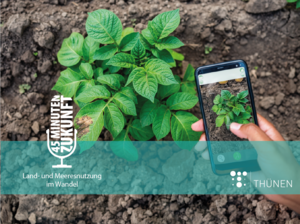
Food waste is a burden on the environment, the economy and society. In conversation with our guests we clarify where the waste is generated, how artificial intelligence can reduce it and where politics and research should start.
Every year, around a third of all food ends up in the bin. This harms the environment, burdens the economy and, given the unequal distribution of food worldwide, is also a social problem. In Germany alone, around 10.8 million tonnes of food were thrown away in 2022. In production and processing, inadequate cooling or pest infestation are the main causes of losses. In retail and private households, incorrect storage or simply buying too much are the most common reasons for food waste.
The German government has set itself the goal of halving food waste in Germany by 2030. Artificial intelligence (AI) can help to achieve this goal: AI-supported systems, for example, detect pest infestation in the field at an early stage, reliably estimate the shelf life of fruit and vegetables, and help to optimise supply planning in bakeries in a targeted manner.
In this episode, we talk to Prof. Dr. Engel Arkenau, Digitalisation Officer at the BMLEH, and Prof. Dr. Birgit Kleinschmit, President of the Thünen Institute, about where food waste occurs, which AI tools are already in use today, and what is needed in politics and research to make progress in the fight against food waste.
The conversation was recorded during the panel discussion on 17 September 2025 at the KIDA-Kon at the Thünen Institute in Braunschweig.
Further links and literature:
- In 2023, the Federal Ministry of Agriculture, Food and Regional Identity (BMLEH) joined forces with 14 wholesale and retail companies to sign a pact against food waste. Under this pact, the companies have committed to halving their food waste by 2030 and donating food that is still edible. (in German)
- As part of the Federal Government's AI Strategy, scientists and AI users are working closely together in the large-scale KIDA project. Their goal is to expand AI resources and expertise in the food and agriculture sector. (in German)
- The Thünen Institute's dossier "Less is more: reducing food losses and waste" presents strategies for preventing food loss and waste and offers a wide range of expert contributions on the topic.
- Collaboration Initiative on Food Losses & Food Wastes was launched during the meeting of the chief agricultural scientists of the G20 countries (MACS-G20). Its aim is to reduce food loss and waste at the international level.
- Since 2012, the coordination centre "Too good for the bin!" has been raising public awareness of food waste and encouraging consumers to value food more. Among other things, an app offers recipe suggestions for leftover food.
- The Compete Centre of Excellence for Food Waste and Food Loss Prevention (KLAV) provides information and training on the topic.
- The Plantix app from PEAT GmbH uses AI to detect plant damage caused by pests, diseases and nutrient deficiencies. It provides farmers with recommendations for action to reduce crop losses.
- The FreshRegio application from the Deggendorf Institute of Technology combines modern near-infrared sensor technology with AI to determine the quality and shelf life of fruit and vegetables. The project was funded by the Federal Ministry of Agriculture, Food and Rural Affairs (BMLEH). (in German)
- The AI-supported Winnow Vision system uses cameras in restaurant kitchens to record which foods are thrown away and calculates the financial losses and carbon footprint. This enables chefs to better calculate food quantities in future and optimise processes.

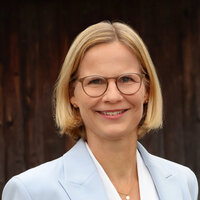
Prof. Dr. Birgit Kleinschmit is President of the Thünen Institute and advocates interdisciplinary research to promote the sustainable and modern transformation of our agricultural and food systems.