
Episode 20: The soil hangs onto the tree
What is the foundation of climate-resilient forests?
28.04.2025
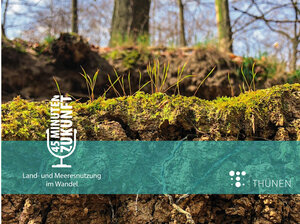
Without forest soil, there is no forest. It provides trees with water, vital nutrients, and stability. However, nitrogen inputs and climate change are putting pressure on forest soils. In order to preserve it, we need long-term approaches that consider both the entire ecosystem and its utilisation.
"In agriculture, you can change the crop rotation every year, but that does not work in the forest. That is why restructuring forests takes decades."
Dr. Nicole Wellbrock, Head of the Department for Soil Protection and Forest Health at the Thünen Institute of Forest Ecosystems.
Germany's forest soils are increasingly affected by acidification, nutrient deficiency, and persistent drought stress. At the same time, the demands on forests and their soils are increasing: forest management, nature conservation, local recreation, carbon storage. For example, forest soil helps to protect against flooding. To ensure that forests can continue to fulfil all these functions in the future, more attention must be paid to the forest soil.
But the mills in the forest grind slowly. Unlike arable land, forest soils cannot be irrigated, tilled or fertilised.
Strategies must be designed for the long term and consider both the entire ecosystem and its utilisation. There are already a variety of approaches: In forestry, mixed stands are being strived towards, for sustainable, stable forests. It is also beneficial to leave brushwood and deadwood in the forest to protect the soil. To prevent damage caused by harvesting machines, defined logging roads are established to minimise traffic in the remaining forest.
In order to find out how Germany's forest soils are doing, the third National Forest Soil Inventory is currently underway under the leadership of the Thünen Institute of Forest Ecosystems. The team is investigating, for example, how forest soils have changed since the last Soil Inventory and how climate change is influencing soil properties.
"In the past, landowners always wanted to get rid of the water. Now they want exactly the opposite, they want to keep the water on the land"
Prof. Dr. Friederike Lang, Professor of Soil Ecology at the Albert Ludwigs University of Freiburg.
In the new episode of the Thünen podcast ‘45 Minuten Zukunft`, Dr. Nicole Wellbrock and Prof. Dr. Friederike Lang discuss what the path to climate-resilient forest soils could look like.
Our guests talk about how forest soils are changing in the face of climate change, what constitutes a forest soil that supports trees and shrubs well even in hot and dry conditions, and what role forest utilisation plays.
Further links and literature:
- The Thünen Institute of Forest Ecosystems is responsible for the Forest Soil Inventory.
- The FAQ on forests and floods on the Thünen Institute's homepage provides answers on how forest soils can contribute to flood protection.
- The Thünen Topic Forests on the Thünen Institute's homepage contains a dossier on forests in climate change and further contributions by experts from the four Thünen Institutes of Wood Research, Forestry, Forest Ecosystems and Forest Genetics.
- The article by the Federal Ministry of Food and Agriculture illustrates the properties and functions that characterise forest soils. (in German)
- The forest soil was the Soil of the Year 2024. The associated homepage shows the diversity of forest soils.
- The Federal Ministry of Food and Agriculture describes selected results of the second Forest Soil Inventory in the article ‘Healthier forest soils’. (in German)

Prof. Dr. Friederike Lang heads the Soil Ecology group at the University of Freiburg. Her research focuses on forest soils and their interactions with plants and soil organisms.

Dr. Nicole Wellbrock is Head of the Department for Soil Protection and Forest Health and contact person for the Forest Condition Survey and the Forest Soil Inventory.