![[Translate to English:]](/media/_processed_/7/1/csm_IMG_7977_large_1defaf5de1.jpg "[Translate to English:]")

Project
Sustainable passive fisheries in the southern North Sea
Sustainable Passive Fisheries in the Southern North Sea: Potential and Opportunities
The German coastal fishery is under pressure. PassFisch explores whether passive fishing for brown crab and lobster in the southern North Sea can offer a sustainable and economically viable alternative for the sector.
Background and Objective
The German cutter and coastal fishery faces major challenges due to the expansion of offshore wind energy, spatial conflicts with marine protected areas, economic uncertainties, and the effects of climate change. The research project PassFisch investigates whether passive fishing for brown crab (Cancer pagurus) and European lobster (Homarus gammarus) in the southern North Sea can offer an ecologically sustainable and economically viable alternative for the coastal fishery. To this end, new monitoring approaches are being developed to better assess stocks, habitats, and management options. In cooperation with partners from the fisheries sector, PassFisch analyzes ecological potentials, value chains, and regional marketing opportunities. The goal is to develop recommendations for sustainable management and co-use concepts within marine spatial planning - creating new perspectives for the coastal fishery.
Target Group
Fishing sector, marine spatial planners, marine conservationists, decision makers, academia, public
Approach
For long-term sustainable adaptation strategies in fisheries, an interdisciplinary approach is required that equally considers ecological, economic, and institutional aspects. The project goals are implemented through four work packages: WP1) Ecological Sustainability, WP2) Spatial Analyses and Resource Management, WP3) Economic Viability and Value Creation, and WP4) Knowledge Transfer and Synthesis. WP1 and WP2 provide the basis for ecological assessments and spatially informed recommendations, WP3 evaluates economic potential and marketing opportunities, and WP4 translates the results into practical applications.
Data and Methods
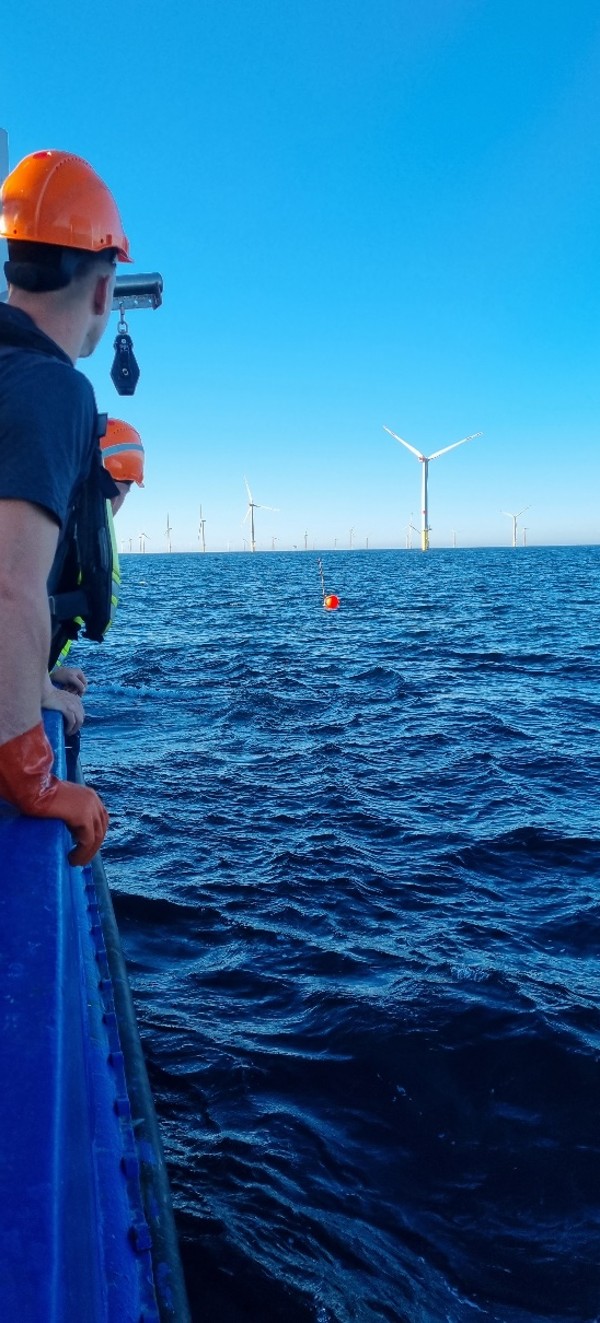
PassFisch improves the scientific data on decapod stocks in the southern North Sea. This involves new standardized surveys at sea, the analysis of existing catch data for stock assessments and distribution maps, and the study of relevant habitats. VMS and AIS data, along with agent-based models such as FISHCODE, support the identification of core fishing areas to be considered in marine spatial planning.
In parallel, economic analyses are conducted to assess the potential of passive fisheries. Real operational models are evaluated in terms of resource requirements, costs, working hours, investments, and revenues. Market analyses, interviews, and international scoping explore supply chains, price ranges, labeling requirements, and marketing barriers, with a focus on regional value creation, direct marketing, and sustainability incentives.
The ecological and economic assessments are carried out together with fishing companies and other stakeholders from gastronomy, tourism, spatial planning, offshore wind energy, and administration. Two stakeholder workshops ensure feedback on key findings and the development of targeted recommendations. In cooperation with the "Informations- und Koordinierungsstelle Transformation Fischerei" (IKTF), measures are implemented to increase the visibility of project results and to facilitate the practical transfer of sustainable adaptation strategies.
Our Research Questions
How can a comprehensive monitoring concept be developed and tested to reliably assess the distribution and abundance of lobster and brown crab, as well as their essential habitats?
What spatial patterns characterize key fishing areas for lobster and brown crab, and to what extent do they overlap with ecologically sensitive habitats or other spatial uses?
How economically viable is passive decapod fisheries, and what opportunities do existing or alternative value chains offer for sustainable use?
Which recommendations can be derived for sustainable management of lobster and brown crab, and how can co-use approaches be implemented within the framework of marine spatial planning?
Thünen-Contact

Involved Thünen-Partners
Funding Body
-
Bundesland Niedersachsen
(national, öffentlich)
Duration
9.2025 - 8.2029
More Information
Funding program: EMFAF - Europäischer Meeres-, Fischerei- und Aquakulturfonds
Project status:
ongoing