![[Translate to English:]](/media/_processed_/7/1/csm_IMG_7977_large_1defaf5de1.jpg "[Translate to English:]")

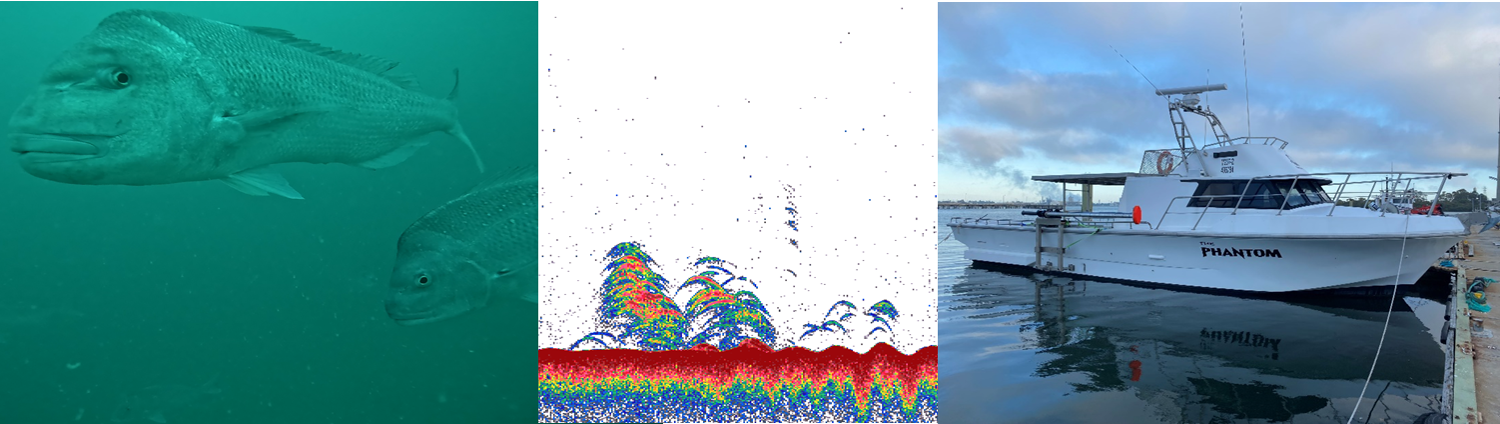
Australian snapper is a species of sea bream that is popular among recreational anglers, but also important to Australia's commercial fisheries. Due to late sexual maturity and a relatively slow reproduction rate, combined with high fishing pressure, local stocks have declined sharply in recent years, leading to temporary fishery closures. Until now, the population dynamics of Australian snapper has been estimated through daily egg production methods based on plankton samples. Hydroacoustics could be a good method for a more comprehensive, efficient and cost-effective stock assessment.
Background and Objective
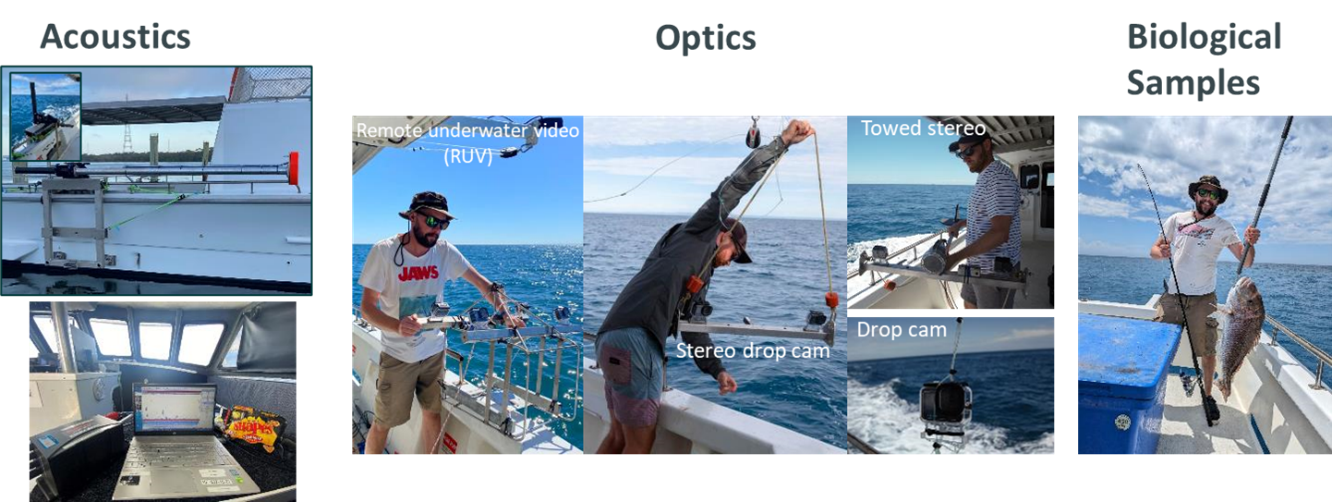
One of the most important parameters for the long-term sustainable management of Australian snapper (Chrysophrys auratus) is the development of robust, fishery-independent population assessments. Currently, this is achieved mainly through egg surveys, but these are very time consuming and costly, and doubts about the validity of the assessments are widespread among scientists, fishermen and fisheries managers alike. The aim of the project is to combine hydroacoustic methods with optical methods and biological sampling to develop efficient and robust population parameters.
Approach
At the Thünen Institute of Sea Fisheries, we have played a leading role in designing the SSP surveys and are directly involved in data collection. In southern Australia, the main aggregations are concentrated around wrecks and other structures on the seabed. The absolute majority of schooling fish can be found within 100 metres of these structures/wrecks. To ensure that the entire school is captured, we have developed a star-shaped transect pattern over selected wrecks.
Our Research Questions
How can highly regionalised, reef-associated and shoal-forming sea bream be detected using acoustic methods?
How can fisheries relevant parameters such as abundance and biomass be estimated efficiently and, if possible, non-invasively?
Publications
Scientific publication (Open Access) “Estimating abundance of fish associated with structured habitats by combining acoustics and optics” : This study introduces an innovative method for estimating fish abundance in structured habitats like reefs. By combining acoustic echosounder data with remote underwater video (RUV) footage, the researchers achieved a more accurate assessment of fish community composition. The integrated approach allowed for the estimation of Chrysophrys auratuspopulations as well as 17 other species at a subtropical reef in Shark Bay, Western Australia. This method offers a practical solution for monitoring fish species that are patchily distributed and aggregated in complex habitats, providing valuable data for fisheries management in ecosystems where traditional survey methods fall short
- Scentific publication (Open Access) “Aerial drones and recreational fish finders: evaluating a low-cost method for surveying fish aggregations” : This paper explores a cost-effective approach to monitoring fish aggregations by combining drone imagery with data from recreational fish finders. The method targeted spawning aggregations of pink snapper (Chrysophrys auratus) in Cockburn Sound, a sensitive marine area near Perth, Australia. Over two spawning seasons (September–November 2022 and 2023), the method successfully captured both surface and deeper aggregations, delivering data on their frequency, distribution, and size. While the equipment was relatively inexpensive, the planning, fieldwork, and data processing were time-intensive. Nonetheless, the approach offers a viable alternative to expensive scientific equipment and provides critical data for environmental assessments and fisheries management in heavily used coastal regions.