![[Translate to English:]](/media/_processed_/6/1/csm_AdobeStock_543466681_9df3d40718.jpeg "[Translate to English:]")
![[Translate to English:]](/media/_processed_/6/1/csm_AdobeStock_543466681_6eab1c26f9.jpeg "[Translate to English:]")
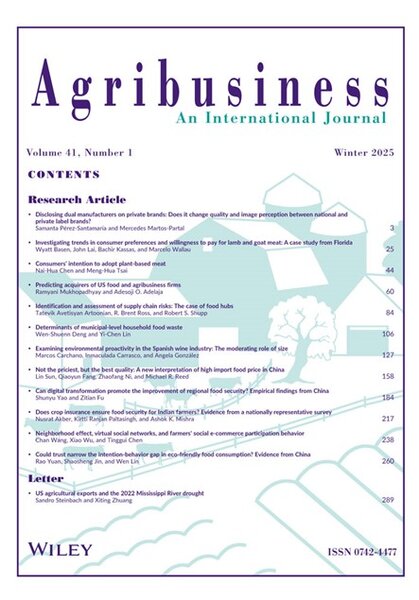
Using a stochastic metafrontier model, the study reveals efficiency differences in apple production between Germany, Italy, and Poland. These differences can largely be explained by varying levels of technology endowment across the three countries and differing access to existing technology. For this purpose, FADN fam-level data for the years 2014 to 2020 were used. The results show that Germany and Italy operate at a high technological level, while Poland still lags behind. German farms also make the most efficient use of available technology. The findings further suggest that subsidies tend to reduce efficiency in all three countries, whereas the effects of other variables vary by country: a higher degree of specialization increases efficiency in Germany and Poland but decreases it in Italy. In addition, the share of family labor has a negative impact on efficiency in Italy, while it shows no significant effect in the other two countries. The study highlights the need for country-specific measures to ensure appropriate framework conditions for maintaining the competitiveness of apple production.
The article, titled "Efficiency and Technology Gap in European Apple Production - A Metafrontier Model for Germany, Italy, and Poland" has been published in Agribusiness, an international journal on agricultural economics.
Contact: Anika Muder