[Translate to English:]
[Translate to English:]
Institute of

OF Organic Farming

Grasslands

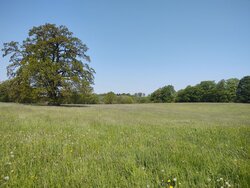
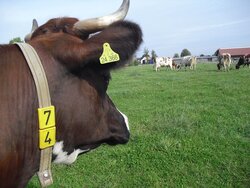
Permanent and temporary grassland are of great importance in organic farming (around 50% of the area). The use of meadows and pastures is not only for feed production for ruminants (cattle, sheep, goats). Grassland also provides outdoor space for poultry and pigs and can contribute to the feed supply for these animals. The preservation and use of grassland contribute to the provision of ecosystem services (biodiversity, climate protection, water and nature conservation). Therefore, in grassland management, it is important to reduce conflicts and trade-offs through site-adapted management and to maintain multifunctionality.

Ongoing Projects

RindforNet

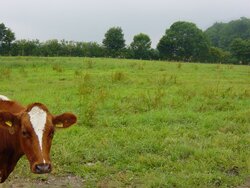
In the joint project "Research Network on Cattle in Schleswig-Holstein" questions of digitalisation in dairy cattle husbandry, in pasture management, in monitoring udder health and in the use of climate assessment tools are highlighted. The five research and advisory organisations with dairy cattle testing stations (two organic, three conventional) based in Schleswig-Holstein are pooling their know-how and capacities here.

More
RindforNet

Establishment of Drought-Resistant Species in Grass clover leys for grazing

The establishment of drought-resistant grasses and forage herbs in grass clover leys/temporary grassland can mitigate yield depressions during dry periods and create potential for grazing such swards. This project aims to quantify which species groups (grasses, legumes, herbs) contribute how much to yield stability and forage quality, and to develop site- and system-adapted solutions.

More
Establishment of Drought-Resistant Species in Grass clover leys for grazing

Grass-fed milk - seasonal calving in Germany?

Seasonal calving of dairy cows can facilitate the production of grass-fed milk. However, this is uncommon in Germany. Advantages for the national dairy sector, existing boundaries and a possible Implementation are unclear and will be debated in this project.

More
Grass-fed milk - seasonal calving in Germany?

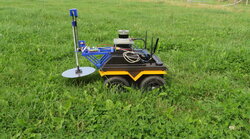
Robots for digital pastures

Robotics can make a significant contribution to the digitalization of agriculture by taking on labor-intensive activities. This project aims to make technical solutions accessible to small farms and strengthen pasture based systems.

More
Robots for digital pastures

Finished Projects

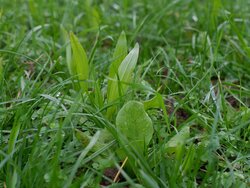
Keeping after dock and thistles

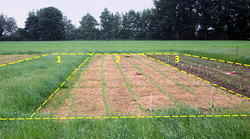
Again and again root weeds, particularly dock species (Rumex spp.) in grassland and creeping thistles (Cirsium arvense) on the field, give organic farmers a hard fight. Both can spread quickly. Once they have gained a foothold, it is difficult to banish them again. We examined the factors that foster the spread and which measures will help to get rid of them.

More
Keeping after dock and thistles

Grassland and phosphorous flows - mobilisation by growth

Phosphorous is a finite resource. Soil reserves must be used more efficient. Due to its high biological activity grassland is particularly important for the phosphorous cycle of farms.

More
Grassland and phosphorous flows - mobilisation by growth

Grassland conversion to arable land and greenhouse gas emissions

Conversion of grassland to arable land induces enhanced emissions of the greenhouse gases carbon dioxide and nitrous oxide. What is the magnitude of these enhanced emissions and can they be counteracted by avoiding soil tillage during conversion? These questions are tackled in two field studies in North-Rhine Westphalia and Schleswig-Holstein.

More
Grassland conversion to arable land and greenhouse gas emissions

Scroll to top