![[Translate to English:]](/media/_processed_/3/e/csm_AdobeStock_249730128_92f14d3a63.jpeg "[Translate to English:]")
![[Translate to English:]](/media/_processed_/3/e/csm_AdobeStock_249730128_a6fcf4c893.jpeg "[Translate to English:]")
Project
Food waste from households and street markets in Zimbabwe
An Analysis of the Determinants of Food Waste in Low-Income Communities: The Case of Hatcliffe, Harare, Zimbabwe
There is evidence of food waste in low-income countries such as Zimbabwe, but there is no data for what is being wasted, how much, when and why?
Background and Objective
Reducing food waste occurring at market and consumption level of the food system is a global challenge that must be addressed to achieve sustainable consumption and to cut the significant ecological footprint of this waste. In this doctoral thesis, the determinants of food waste in a developing country, focusing on low-income households and food street markets, are analysed.
The study characterizes the different types of food waste, estimates the amounts that are wasted, and investigates the causes of waste as well as spatiotemporal variations in food waste in a low-income community.
Target Group
Households and Street Markets
Approach
We collected food waste data from households and from a street market in the same neighbourhood. One research question was if the household behaviour and preferences related to specific time periods may be used to explain food waste occurring at the corresponding street market. Thus, the study examined household food consumption behaviour, attitudes, and perceptions as well as the spatial location of the household at specific times of the year. Consequently, we derived practical community-based recommendations to reduce food waste in low-income communities.
Data and Methods
A mixed-methods technique was applied in the study to collect both qualitative and quantitative data. The study combined a diary survey, a questionnaire survey and waste composition analysis in data collection. The kitchen diary survey allowed participants to record the types of food wasted and the reasons in real time. On the other hand, the waste composition analysis provided data on the quantities of discarded food. The questionnaire survey gathered information on participants' sociodemographic characteristics, food-related practices, and waste streams. By combining diary surveys and waste composition analysis we can estimate the quantities of what is being wasted and examine the spatiotemporal variations in food waste.
In the first round of data collection conducted in the harvest season (May-June 2023), 75 households participated in the waste composition analysis and kitchen diary surveys, additionally, we conducted 200 face-to-face questionnaire surveys. At the street market level, food waste from 33 market stalls was sorted and weighed and 25 vendors participated in the face-to-face questionnaire surveys. Our second data collection phase was in the lean season (October-November, 2023), where the same methodology was applied to collect data. 75 households participated in the waste composition analysis and kitchen diary surveys and 200 in the questionnaire surveys. However, due to the changes in the waste management system, a bulk sample was analysed from the street market, from approximately 80 stalls. 14 vendors participated in the questionnaire survey.
Our Research Questions
- Which types of food are wasted in households and at street markets, and which quantity is wasted?
- What are the causes of food rejection and food waste in low-income communities?
- How does food waste vary through space and time in Hatcliffe?
- Are there sustainable community-based intervention strategies for food waste reduction that can be adopted in low-income communities?
Results
Household food waste in Hatcliffe amounted to about 330 kg, averaging 3.19 kg per household per week (approximately 46 kg per capita per year), of which 59% was avoidable. The waste primarily consisted of leftovers from cooked foods such as sadza (a thick maize porridge), pasta, rice, and kale, with sadza being the most frequently discarded item. Common causes included cooking too much, serving larger portions than needed, and cultural or personal preferences, for example, plain sadza and black tea were often considered less valuable. Some households used traditional preservation techniques, including drying, salting, smoking, and fermenting, to reduce waste. A social practice approach was used to understand how material conditions, culinary skills, and socio-cultural norms interact to shape household food waste. Food waste reduction efforts should focus on increasing awareness of proper food storage and creatively reusing leftovers. Education on issues such as over-preparation, portion control, and the perceived value of food can help challenge existing norms and other practices that contribute to household food waste.
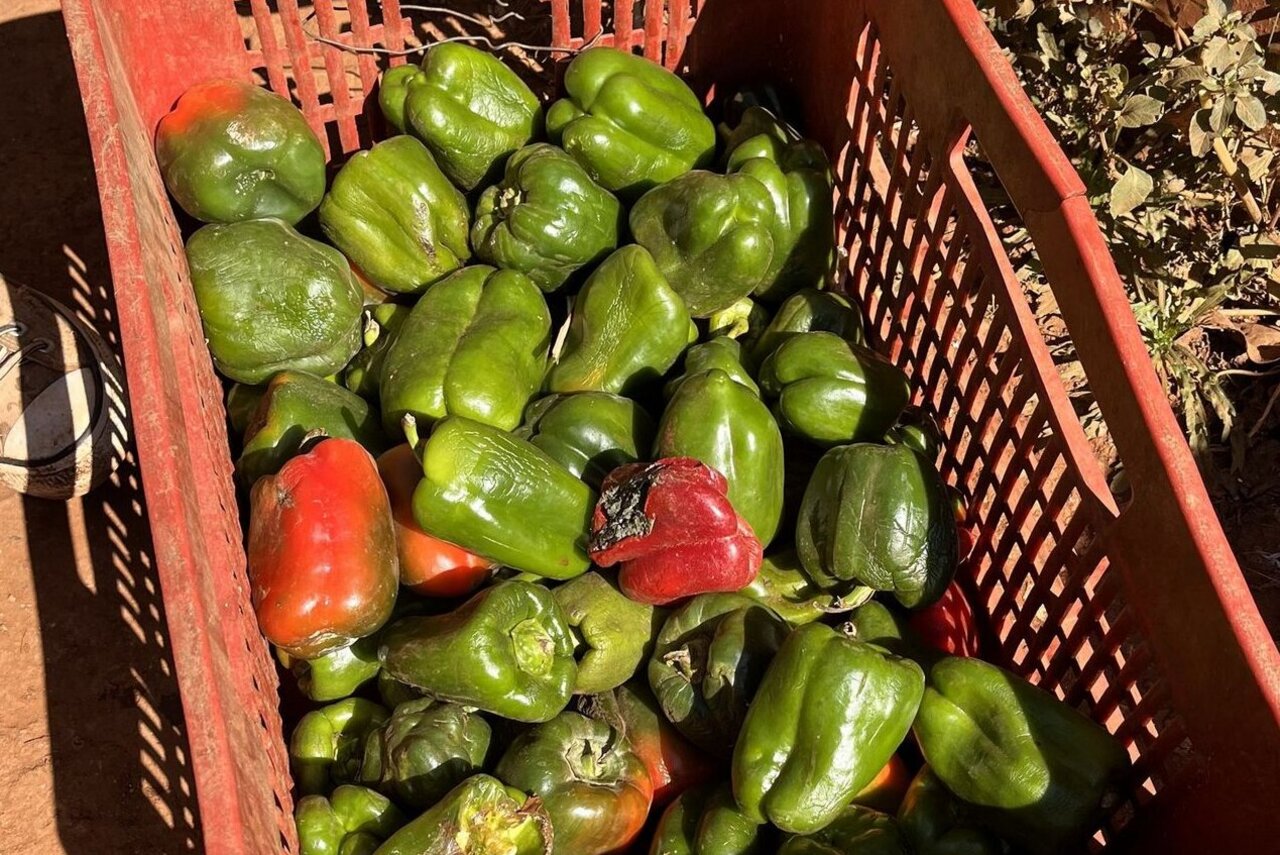
At the street market level, approximately 1,400 kg of food waste was recorded, of which 83% was avoidable. Tomatoes, bell peppers, cucumbers, bananas, and citrus fruits made up the bulk. Main drivers included overstocking, lack of refrigeration and storage, financial constraints of consumers, and high competition among vendors, which left more products unsold. Seasonal factors also influenced waste: intense sun and heat during the lean season damaged fresh produce, while rainy weather spoiled dry goods. Despite some vendors selling imperfect produce to informal canteens or applying traditional preservation methods, poor infrastructure and handling skills resulted in substantial avoidable waste. Recommendations include improving market facilities, introducing low-cost cooling, training vendors, and raising consumer awareness about the value of imperfect produce to reduce waste and support more sustainable urban food systems.
Project brief: Mada SY, Schneider F (2026) An analysis of the determinants of food waste in low-income communities: the case of Hatcliffe, Zimbabwe. Braunschweig: Thünen Institute of Market Analysis, 2 p, Project Brief Thünen Inst 2026/05a, DOI:10.3220/253-2026-14
Thünen-Contact

Involved Thünen-Partners
Publications
- 0
Mada SY, Schneider F (2026) An analysis of the determinants of food waste in low-income communities: the case of Hatcliffe, Zimbabwe. Braunschweig: Thünen Institute of Market Analysis, 2 p, Project Brief Thünen Inst 2026/05a, DOI:10.3220/253-2026-14
- 1
Mada SY, Schneider F (2026) Eine Analyse der Einflussgrößen auf Lebensmittelabfälle in einkommensschwachen Gemeinden: der Fall Hatcliffe, Simbabwe. Braunschweig: Thünen-Institut für Marktanalyse, 2 p, Project Brief Thünen Inst 2026/05, DOI:10.3220/253-2026-13