
In this study, we developed a low-threshold, IPCC-compliant method for estimating tree biomass and CO₂ storage in forest stands. By integrating segmented allometric biomass functions into fourth-generation yield tables, we created our CO₂ yield tables that combine empirical data and simulations for Northwest Germany. Above- and belowground biomass was calculated, converted into CO₂, and compared with conventional expansion factor methods. To make the results accessible, we designed an interactive R Shiny dashboard for visualisation and exploration.
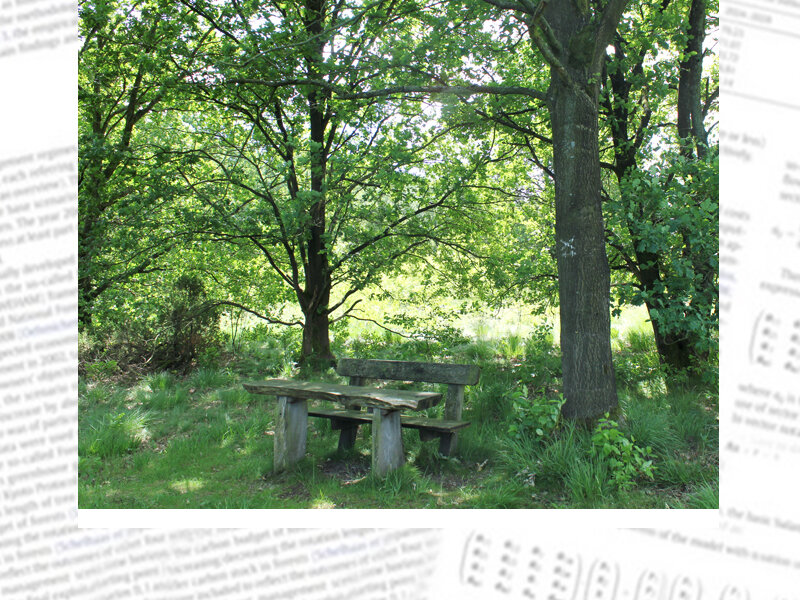
Our CO₂ yield tables cover European beech (Fagus sylvatica), pedunculate and sessile oak (Quercus spp.), Norway spruce (Picea abies), Scots pine (Pinus sylvestris) and Douglas fir (Pseudotsuga menziesii) across multiple yield classes, starting from age one and thus including the juvenile phase of stand development. Traditional expansion factor methods for total forest stands were found to overestimate carbon content by 20–35%, particularly in mature stands, while our approach provides more realistic early-growth representation.
Overall, the study highlights that the choice of CO₂ methodology significantly affects outcomes. Our yield tables and the accompanying dashboard offer a transparent, accessible tool for quantifying forest CO₂ stocks—supporting sustainable forest management and participation in carbon markets.
Brinkord M, Seintsch B, Elsasser P (2025) CO2 estimation of tree biomass in forest stands : a simple and IPCC-compliant approach. Forests 16(10):1580, DOI:10.3390/f16101580
https://literatur.thuenen.de/digbib_extern/dn070233.pdf