
![[Translate to English:]](/media/_processed_/f/3/csm_2022_Titelbild_gross2_Saatgut_in_Hand_9ffb8f5748.jpg "[Translate to English:]")
![[Translate to English:]](/media/_processed_/f/3/csm_2022_Titelbild_gross2_Saatgut_in_Hand_c17270fcc0.jpg "[Translate to English:]")
Project
Evolution of monoecy and dioecy
Lead Institute
FG
Institute of Forest Genetics
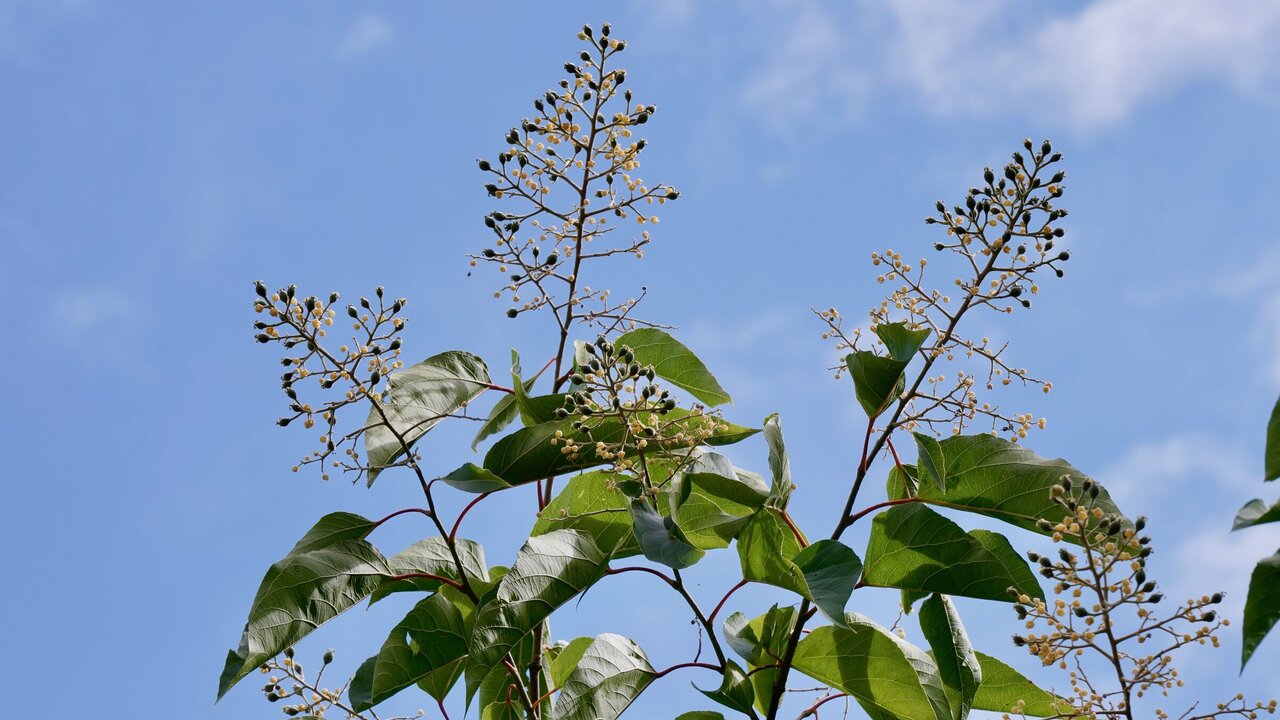
© Martina Wolf
In the project 'MonDiö' we want to study different tree species of the Salicaceae family with distinct sexual systems to address important questions regarding the molecular evolution of sex determination.
Background and Objective
While our understanding of the genetic basis of dioecy in specific plant species and genera is rapidly expanding, there is still a substantial lack of knowledge regarding the molecular evolution of sex-determining genes over longer evolutionary timescales and during transitions between sexual systems. Are the sex-determining genes conserved across distant genera? Can the same genetic networks control sex determination in different sexual systems, such as monoecy and dioecy? By studying the molecular genetics of sex determination in several related dioecious and monoecious genera, these questions can finally be addressed.
Approach
Here, we propose to address important questions regarding the molecular evolution of sex determination by using the Salicaceae family as a model system. The family comprises the well-studied dioecious systems poplar and willow where the ARR17 gene was repeatedly identified as a master regulator of sex determination. First, we want to work out the genetic and molecular basis of monoecy in Poliothyrsis sinensis, the closest monoecious relative of poplar and willow. To this end, we will perform an RNA-seq time-course experiment with female and male parts of the developing inflorescence. Second, we want to resolve the genetic basis of sex determination in the related dioecious genus Idesia. We will sequence female and male Idesia polycarpa individuals to identify the sex-determining region and characterize possible sex-determining genes. Third, we propose to test whether the ARR17 gene from different Salicaceae species can act as a sex switch in poplar. To this end, we will transform early-flowering male white poplar (Populus alba), which does not carry any ARR17 sequences, with increasingly divergent ARR17 genes. Finally, we want to artificially engineer monoecy in poplar by cis-regulatory manipulation and generation of an ARR17 expression gradient. In conclusion, the proposed project will use the Salicaceae family as a model system to provide new insights into the evolution of sex-determining genes and transitions between monoecy and dioecy. The results will contribute to our general understanding of the molecular evolution of plant sexual systems.
Thünen-Contact

Involved Thünen-Partners
Funding Body
-
Deutsche Forschungsgemeinschaft (DFG)
(national, öffentlich)
Duration
6.2025 - 5.2028
More Information
Project funding number: MU 4357/3-1
Project status:
ongoing
Publications
- 0
Zhao J, Wang D, Chen K, Xie J, Li Y, Wang Y, Zhao L, Yang Y, Olson MS, Müller NA, Liu J, Renner SS, Ma T (2026) A new two-gene system of sex determination in a Salicaceae. Current Biol 36(2):492-505, DOI:10.1016/j.cub.2025.12.003
Scroll to top