![[Translate to English:]](/media/_processed_/2/9/csm_Embryo-Exp_Gelege_9F_dpf5-200513111619_c8534a8199.jpg "[Translate to English:]")
![[Translate to English:]](/media/_processed_/2/9/csm_Embryo-Exp_Gelege_9F_dpf5-200513111619_9027994d44.jpg "[Translate to English:]")
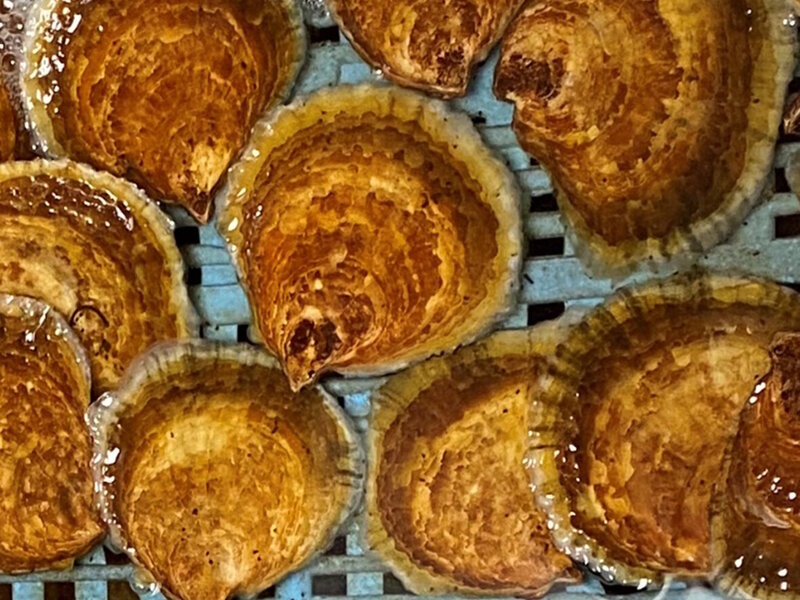
How do the most vulnerable life stages of the European flat oyster (Ostrea edulis) respond to pollutants? An international research team including Thünen scientist Dr Berenger Colsoul has now provided the first answers – crucial for ongoing restoration projects in the North Sea.
Until now, knowledge on metal toxicity in oysters has largely come from the internationally recognised “oyster embryo bioassay”. However, this test is not performed with O. edulis, leaving a major gap in understanding the sensitivity of its embryos to heavy metals.
In controlled experiments, larvae of O. edulis and the co-occurring Pacific oyster (Crassostrea gigas) were exposed to different concentrations of copper, zinc, lead, and cadmium – under present-day summer temperatures (18 °C) and simulated heatwave conditions (24 °C). Copper emerged as the most toxic metal for both species. Notably, the native oyster became significantly more sensitive to metal exposure at the higher temperature.
A copper risk assessment for the German Bight suggests that acute larval mortality is unlikely – but sensitive developmental stages could still be at risk in more contaminated coastal areas.
More about Aquaculture