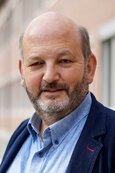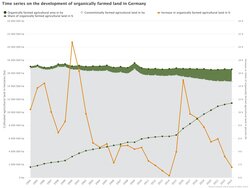

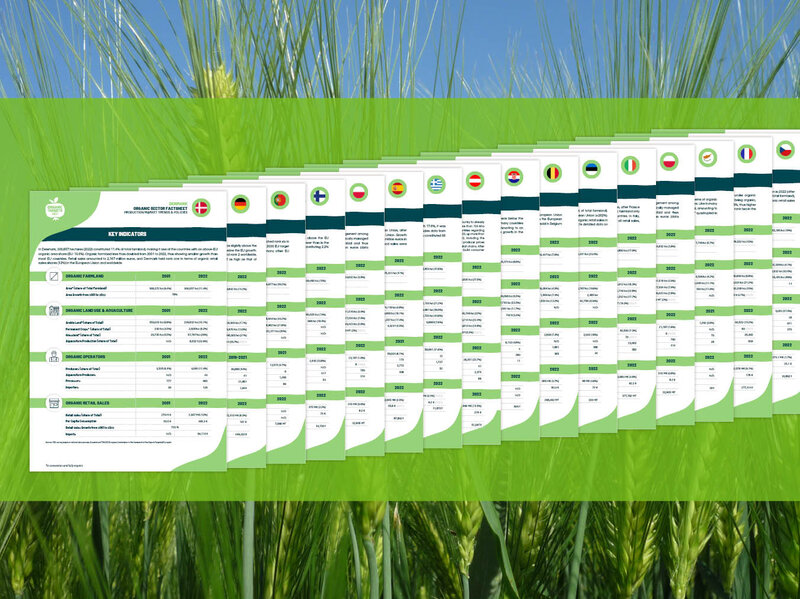
The recently published 29 country factsheets by OrganicTargets4EU provide a comprehensive overview of the current status, progress, and challenges faced by EU member states. In this article, Nic Lampkin, an agricultural economist at the Thünen Institute of Farm Economics and co-author of the OrganicTargets4EU factsheets, particularly focusing on policy support, shares his perspectives on the findings and the opportunities and challenges ahead. Denmark for example emphasizes the organic market. Since 1995, the Scandinavian country has implemented several action plans. A strong focus lies on the use of organic food in the public sector and in restaurants. Now 11.5% of the agricultural areas is managed organically, and 12 % of the retail sales value for food and drink is organic. At €365/head in 2022, Denmark has the highest per capita expenditure on organic food in the EU. Greece plans from 2023 to 2027 to invest 11% of its total CAP expenditure on support for organic farming. This includes 50% of environmental support payments, the highest proportion of any EU Member State.
A summary of the EU wide status update has been published in a new article featuring Nicolas Lampkin. He is an agricultural economist in the Thünen-Institute for Farm Economics and co-author of the country factsheets.
The full article can be found here:
Status and the Road Ahead for the EU's 25% Organic Farming Target - OrganicTargets4EU
Country Factsheets (Englisch):
Factsheets - OrganicTargets4EU
The OrganicTargets4EU project supports the expansion of organic farming and the organic food sector in the context of the EU Farm-to-Fork Strategy. This includes the development of transformation scenarios.
More about the project OrganicTargets4EU: