

Scientists from the inter-institutional Thünen Earth Observation (ThEO) working group are using satellite images to investigate the state of our fields, forests and oceans and how they are changing. They are presenting their current research findings at the Living Planet Symposium in Vienna, Austria. In five lectures, nine posters and an interactive demo session, the team will show how modern earth observation is used at the Thünen Institute.
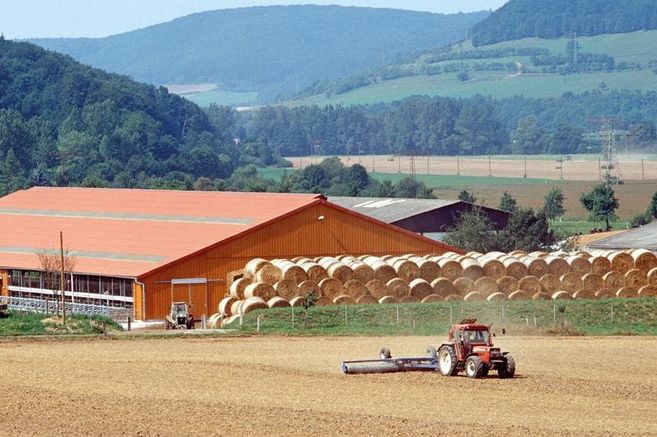
Their investigations are based on data from the Copernicus programme, among others. The researchers use satellite images, for example, to map ecological farmland, monitor deforestation, analyse the state, distribution and development of hedges, moors, grassland and arable land and record biodiversity and carbon pools. Long-term satellite data, high-resolution image data and techniques such as deep learning enable precise and large-scale analyses - from local pilot projects to continental applications. Earth observation has thus become a key tool for sustainable land use and political decision support.
ESA's Living Planet Symposium 2025 is one of the world's largest conferences on Earth observation. The organisers are expecting 6,000 participants from more than 90 countries with 4,200 presentations and posters.