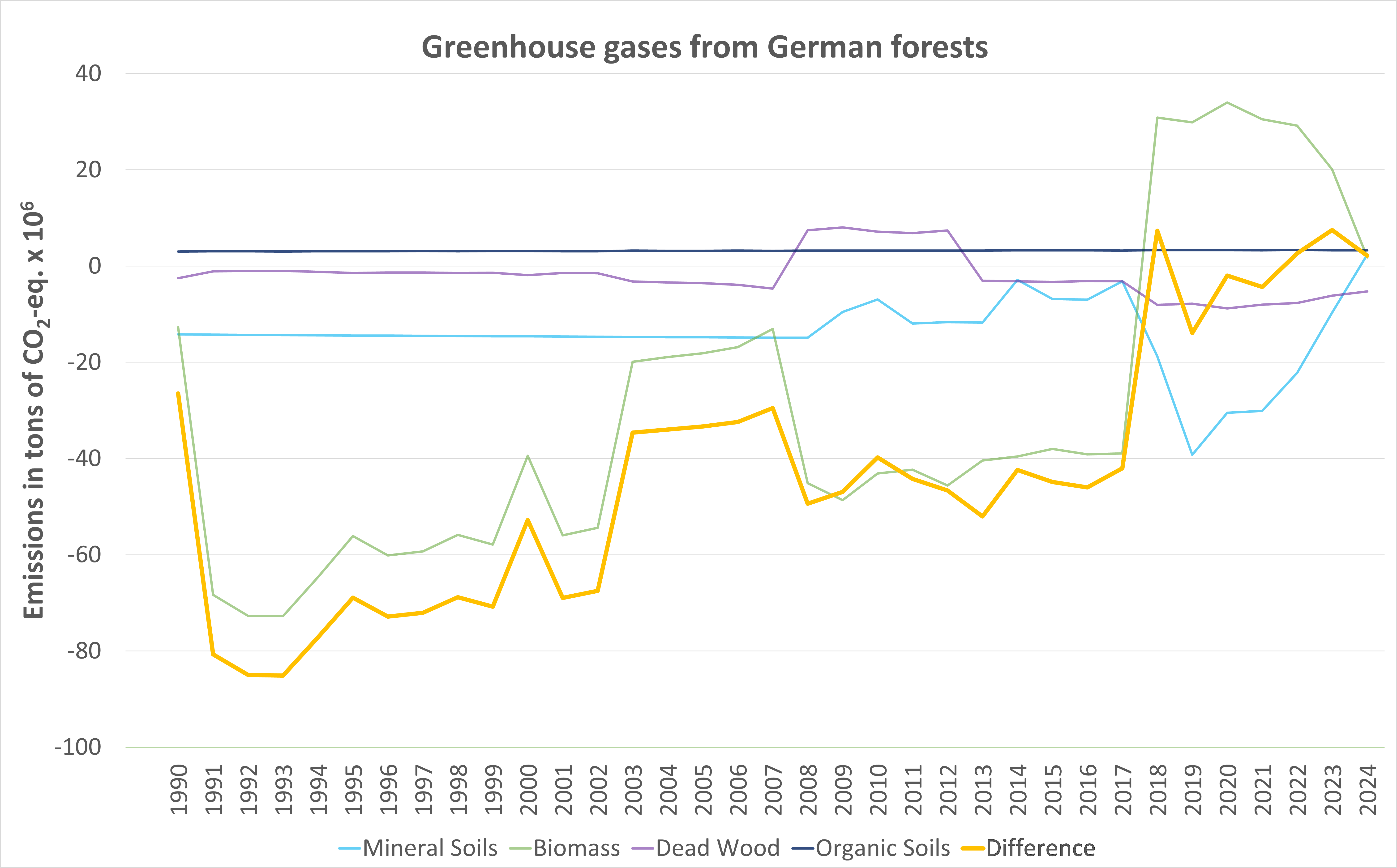
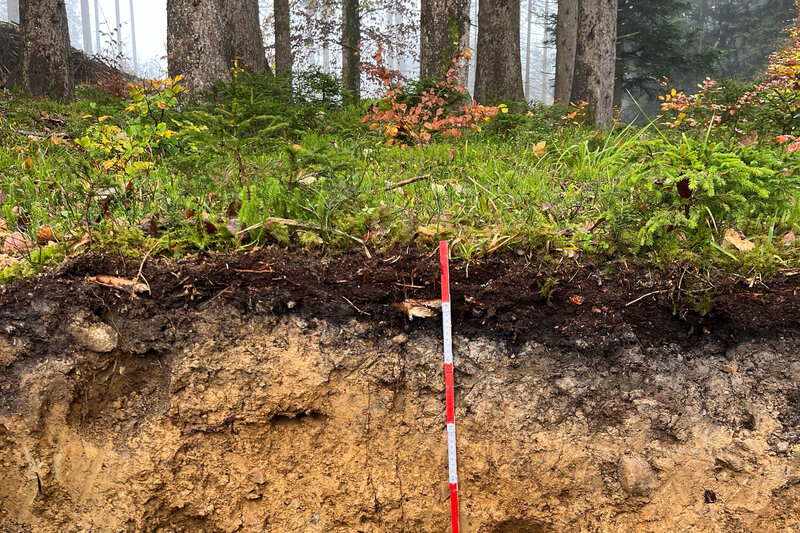
Eberswalde (January 6, 2026). While many trees in Germany's forests died during the dry years from 2018 to 2020 and ceased to function as carbon stores, the forest soil experienced a peak in carbon storage: New findings from the Thünen Institute on soil carbon modelling show that the soil compensated for almost all carbon losses from trees in the first years of damage and took over the sink function of the trees. "The international expert team on greenhouse gas reporting encouraged us to take a closer look at the effects of the damaging events between 2018 and 2020 on soil carbon," says Dr Nicole Wellbrock from the Thünen Institute of Forest Ecosystems, explaining the background to the new modelling. As a result, the data from the soil inventory on carbon in the soil was recalculated. In particular, the deadwood stocks and root biomass were adjusted.
Large numbers of trees died during the dry years. In most cases, the areas were cleared, but in others the deadwood remained on the ground. In addition, there were needles and leaves as well as fine roots that had died in the soil. This abundant layer of litter was broken down by the higher solar radiation and the associated higher temperatures on the bare areas, and the carbon was exported to the soil. The dead roots were decomposed by microorganisms and stored in the soil as humus. Overall, in quantities that do not occur in normal years. "We now suspect that in dry years, trees invest more in root mass than in leaf mass in order to better access the water in the soil," reports soil expert Wellbrock
Almost as much carbon stored in the soil as in the trees
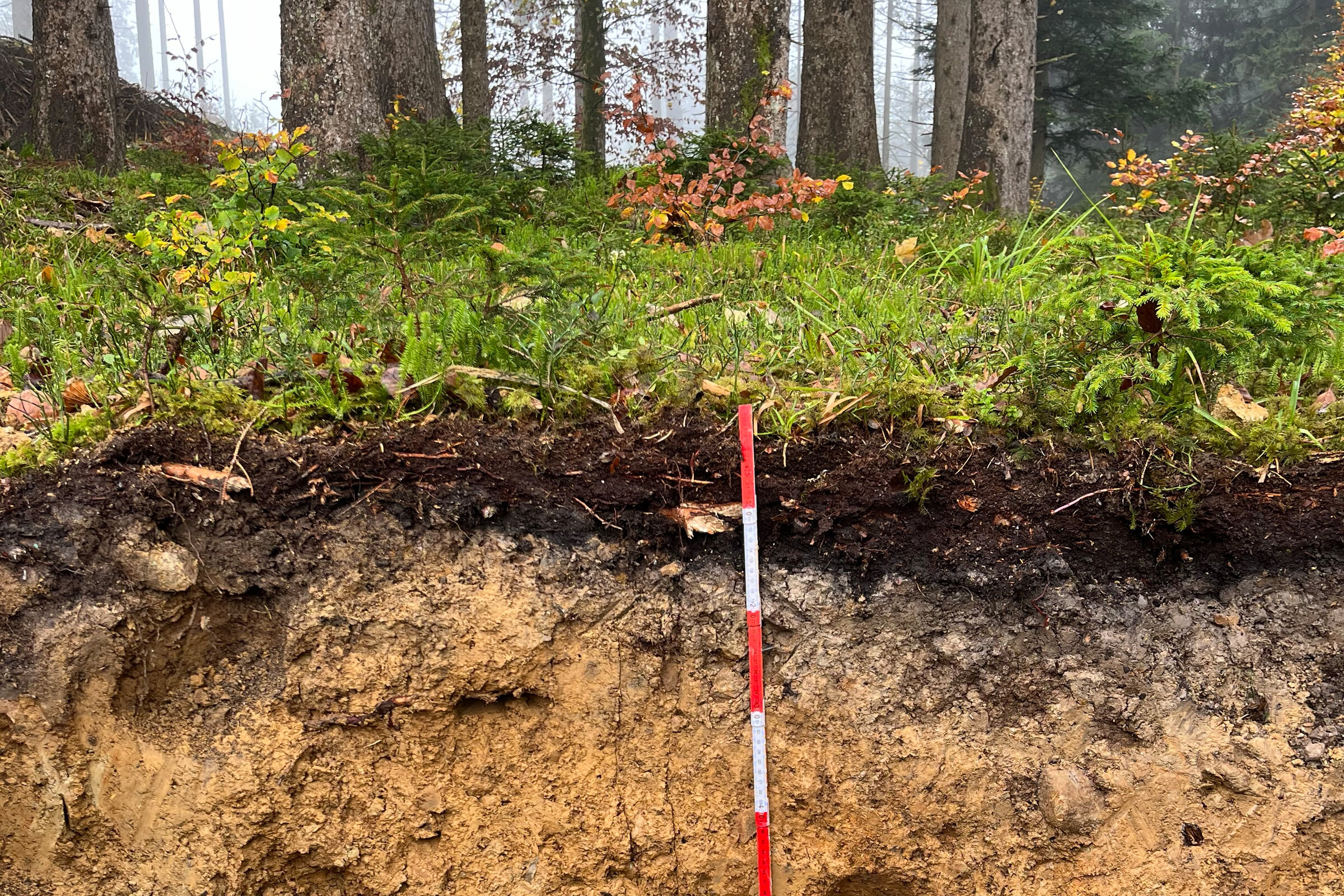
Forests are an important carbon sink worldwide. Trees need the greenhouse gas carbon dioxide (CO₂) to grow and bind it in carbon compounds in wood through photosynthesis, while oxygen is released into the air. Carbon enters the soil through the litterfall of leaves and needles, the decomposition of dead wood and dying roots. Soil carbon is therefore essentially controlled by forest growth. However, soil characteristics and climate also play an important role in carbon sequestration in soils. Climate change also appears to be having an impact through higher average temperatures. More carbon from organic material is being converted into soil carbon.
Currently, there is almost as much carbon stored in the above-ground biomass of forests as in their soils: a total of around 2,200 million tonnes of carbon, or 197.4 tonnes of carbon per hectare. Living trees store 1,184 million tonnes of carbon, or 108 tonnes of carbon per hectare, while litter and mineral soils up to a depth of 30 centimetres store 936 million tonnes of carbon. Deadwood binds 46.1 million tonnes of carbon (4.2 tons of carbon per hectare). All figures are based on data from the 2022 National Forest Inventory and modelling of the current soil inventory (BZE II).
However, the updated modelling also shows that the soil does not absorb carbon from dead biomass at an unabated rate. The process slows down again after just a few years. At the same time, new forests grow on the damaged areas, which in turn store more carbon in their biomass. "The results are based on model calculations. Only the evaluation of the third BZE will provide reliable data," emphasises Nicole Wellbrock. The researchers at the Thünen Institute plan to present the interim results of BZE II, which measures soil carbon content in agricultural areas, forest soils and moors, at the end of next year. Initial results already show that the trend and level of the carbon sink after the new modelling are consistent.