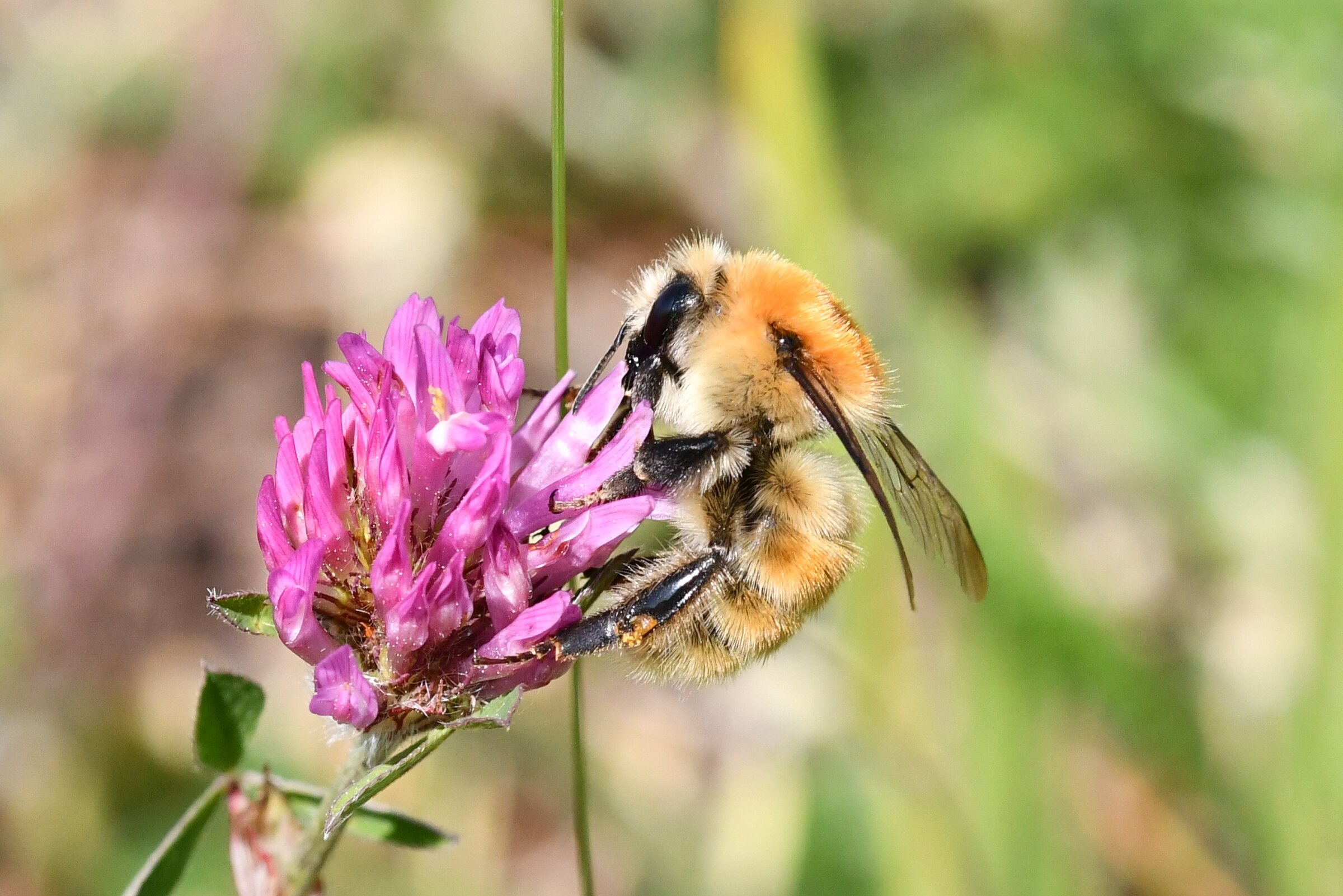
Braunschweig/Munich (18 June 2025). The nationwide bumblebee challenge organised by the Thünen Institute and the BUND Naturschutz in Bavaria is starting just in time for the beginning of summer. The aim of the campaign is to collect valuable data in order to better protect native bumblebee species. Bumblebees are important pollinators, but many of their habitats in the agricultural landscape are shrinking and the bumblebee populations with them. "Bumblebees are an indicator of biodiversity in our cultural landscapes. To recognise declines or make positive developments visible, we need reliable data. The engagement of the public is essential for this," says Dr. Sophie Ogan, project manager for the Bumblebee Challenge at the Thünen Institute in Braunschweig.
This year, special attention is being paid to bumblebees in agricultural landscapes: Wildflower strips, field margins, orchards and pastures are important habitats for many bumblebee species - but it is precisely here that there is often a lack of comprehensive data. ‘Every single bumblebee sighting helps to tighten the network of knowledge, regardless of whether it is made at the edge of a meadow or field or in the herb bed on the balcony,’ emphasises Martina Gehret, project manager at BUND Naturschutz in Bavaria.
The data collection takes place twice a year. The first counting round was carried out in spring 2025. More than 11,000 observations were reported in just three weeks. 20 different bumblebee species were recorded, including rare species such as the heath bumblebee and the Bombus wurlfenii. ‘The high level of participation in spring shows how much potential there is in citizen science,’ says Gehret.
It's easy to take part: the free apps ObsIdentify and Observation help photographing and identifying bumblebees. ObsIdentify is particularly suitable for beginners. Observation allows additional information such as behaviour, flowering plants or sex. All reported observations from the agricultural landscape are included in the analyses of the Wild Bee Monitoring Programme and are reviewed by a team of experts.
If you want to look for bumblebees, pay particular attention to flowering plants such as knapweed, viper's bugloss, Origanum, mallow and thyme. They currently provide important food for bumblebees - and invite you to take a closer look.
Those who take part not only have the chance to help protecting nature, but can also win prizes: Participants can test their knowledge in the bumblebee quiz. Ten attractive prizes will be raffled off among all entries.
Volunteers needed for wild bee monitoring at the Thünen Institute
Bumblebees and other wild bees are very important pollinators, not only for the preservation of biodiversity and intact ecosystems, but also for food security. To date, there is no representative data on the status and development of wild bee populations in Germany. To change this, wild bee monitoring in agricultural landscapes was started in 2020. The project gives volunteers the opportunity to contribute to research and increase their own knowledge of wild bees at the same time. The project is part of the joint project MonViA, the nationwide Monitoring of Biodiversity in Agricultural Landscapes.