Episode 18: All hands to the pump
Does paludiculture offer a climate-friendly alternative for peatland agriculture?
13.03.2025

Intact peatlands are efficient carbon reservoirs and therefore true climate protectors. If they are drained for agriculture and forestry, immense quantities of greenhouse gases escape into the atmosphere. Can paludiculture offer an alternative in the area of conflict between agriculture and climate policy?
“We want to further develop these peatlands with the help of value chains"
Frank Havemeyer, Managing Director of Landvolk Osterholz and farmer.
If Germany wants to achieve its climate targets, it is essential to rewet drained peatlands. But where does this leave agriculture, which has been utilising the dry peatlands so far? Rewetting means a major risk for farms - they have to fundamentally reorganise the management of their soils and the marketing of their products. Dr. Bärbel Tiemeyer points out: "The peatland soils in Germany are very unevenly distributed. The uneven impact on farms makes the discussion difficult." This is why concrete prospects are needed here.
In paludiculture, farmers cultivate plants on peatland sites that love moisture. These include, for example, reeds or peat mosses, which are used as building materials or growing media. There are still few incentives for farmers to switch to paludiculture. This is set to change soon: Just in time for the 25th anniversary of paludiculture, the PaludiNetz is about to be launched. It supports innovative approaches and value chains for the utilisation of wet peat soils. The PaludiNetz combines research and practical projects on peatland soil protection with questions such as: Is large-scale conversion to paludiculture realistic? What new value chains are needed? What political steps are necessary for this? The end result should be a win-win for everyone: For agriculture, society, the economy and the environment.
‘We want to further develop these peatland sites with the help of value chains that are being developed as part of this project and will hopefully be realised in ten years' time,’ says Frank Havemeyer. We're not that far yet. But he is positive: “At the end of the day, we are all pursuing the same goals: The goal of climate protection and peatland soil conservation. Every peatland farmer wants to protect the land on which they farm.”
In this episode, Dr. Bärbel Tiemeyer, scientist at the Thünen Institute of Climate-Smart Agriculture and one of the two heads of the PaludiNetzes, and Frank Havemeyer, Managing Director of Landvolk Osterholz and farmer, are our guests. They discuss what paludiculture can achieve, which alternatives there are and what the farmers concerned need.
Further links and literature:
- The PaludiZentrale coordinates four pilot and demonstration projects for the implementation of paludiculture and peatland protection. The University of Greifswald, the Michael Succow Foundation and the Thünen Institute of Climate-Smart Agriculture are in charge. (partially in German)
- The Teufelsmoor Living Lab is developing specific strategies for the implementation of paludiculture on agricultural peatlands in the Teufelsmoor region. The goals: Raise water levels and establish new value chains. The project is funded by the Federal Ministry of Food and Agriculture (BMEL). (partially in German)
- The Thünen Institute of Climate-Smart Agriculture is measuring greenhouse gas balances and nutrient outputs, among other things, in a sub-project of the Living Lab Teufelsmoor.
- The National Moorland Protection Strategy was adopted by the Federal Cabinet on 9 November 2022. (in German)
- The Federal Ministry for the Environment, Nature Conservation, Nuclear Safety and Consumer Protection (BMUV) provides further information on the national peatland protection strategy, including an explanatory video and further links to https://www.bmuv.de/themen/naturschutz/moorschutzpeatland protection projects and political objectives, on its website (in German).
- The article ‘Climate protection through peatland protection’ by the Federal Ministry of Food and Agriculture (BMEL) provides an overview of the activities of the BMEL and the Federal Government in the field of peatland protection (in German).

Frank Havemeyer is Managing Director of Landvolk Osterholz, an expert in peatland protection and a representative of farmers' interests.
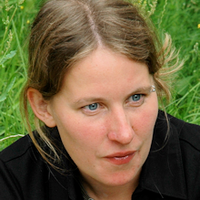
Dr. Bärbel Tiemeyer heads the peatland research group at the Thünen Institute of Climate-Smart Agriculture and investigates greenhouse gas emissions from organic soils.