![[Translate to English:]](/media/_processed_/7/1/csm_IMG_7977_large_1defaf5de1.jpg "[Translate to English:]")

Project
What are they? And how many are they?
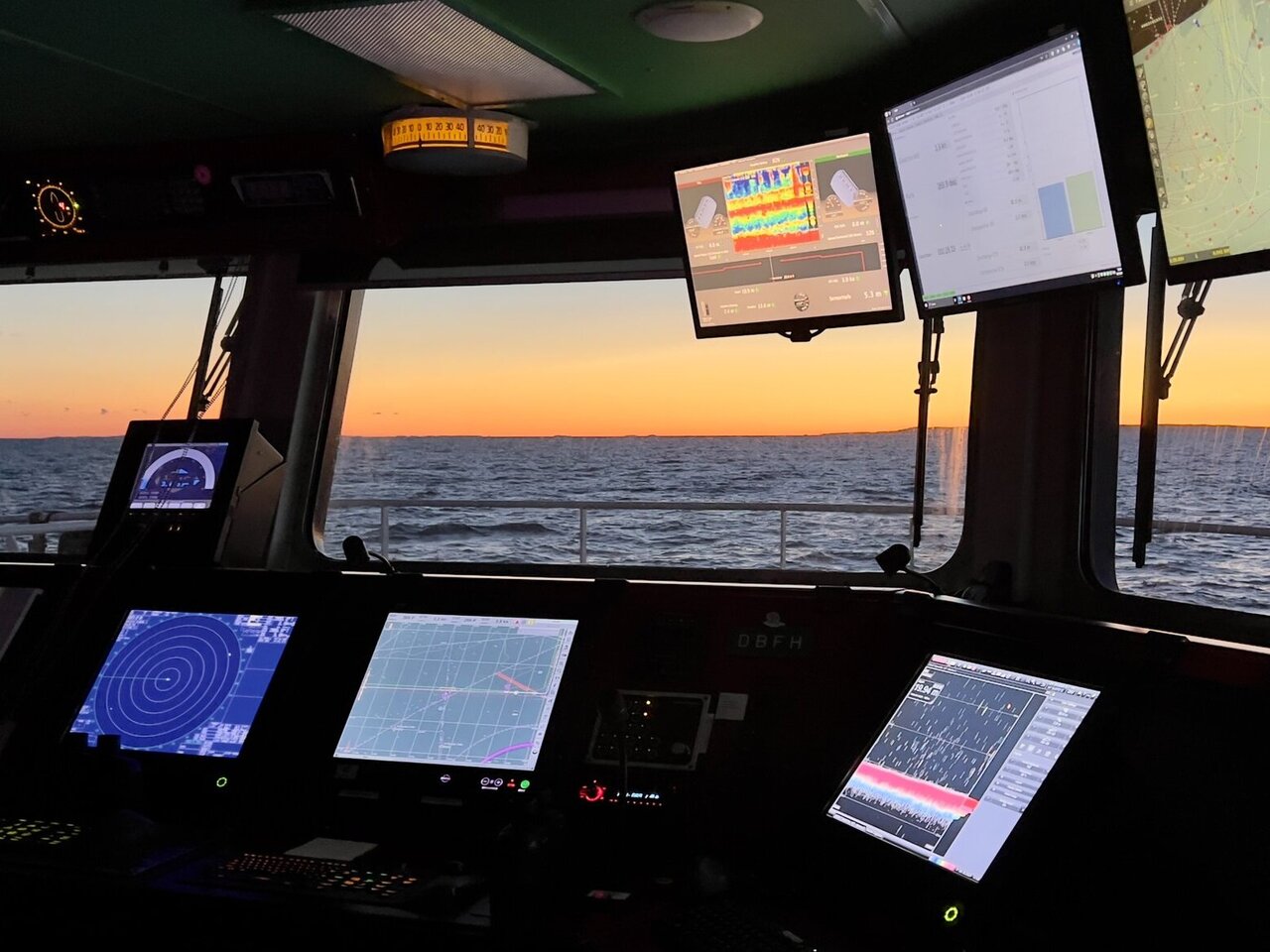
Hydroacoustic monitoring of fish stocks to determine stock parameters and distribution patterns
In hydroacoustic methods, underwater sound waves are used to detect marine organisms. Modern echosounders not only show the distribution of marine life and their preferred habitats, but also provide data for estimating population trends of different fish species. They enable the development of predictive models that can be used to determine whether fishing levels are sustainable.
Background and Objective
Hydroacoustic monitoring allows the direct determination of population parameters and distribution patterns of (mainly) pelagic fish species, i.e. fish species that live in the open sea. In order to provide such population parameters, such as the abundance of different age groups and the spawning stock biomass, as a basis for predictive models to estimate sustainable catch levels, high resolution coverage of the survey area is required. By simultaneously documenting environmental parameters, the distribution patterns and habitat preferences or habitat use of different fish species can also be described.
Target Group
Policy-makers in marine environmental as well as common fisheries policy; Fisheries scientists; interested community
Approach
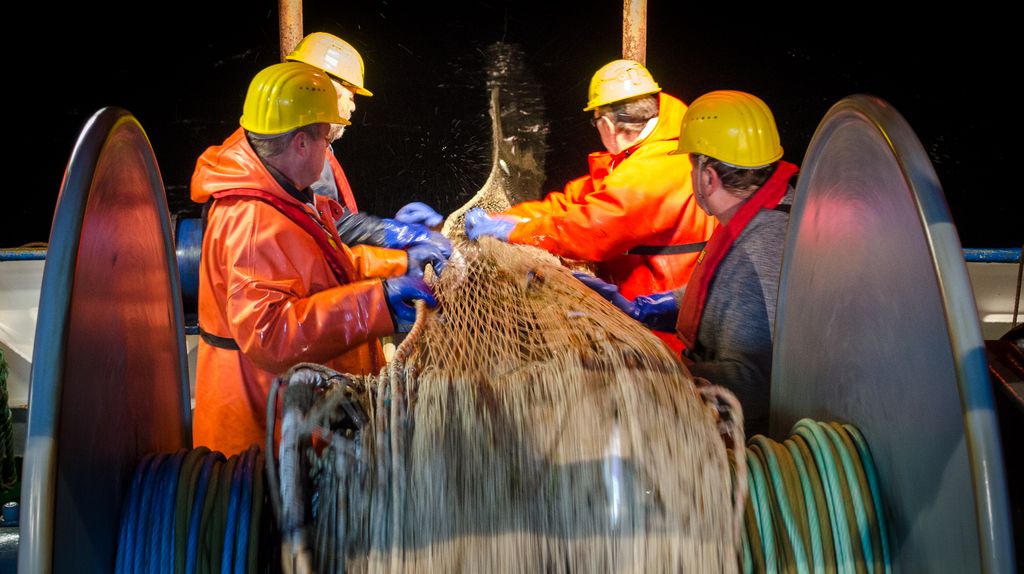
The International Council for the Exploration of the Sea (ICES) co-ordinates international collaborative projects; we participate in the monitoring of pelagic fish stocks in the North Sea, Baltic Sea and Northeast Atlantic. We collect continuous data on the distribution of hydroacoustic backscatter, supplemented by a grid of stationary profiles of environmental parameters (water temperature, salinity, etc.). To validate the acoustic signals, i.e. the echoes from the schooling fish, targeted fishing hauls are carried out with pelagic trawls. These hauls are also used to collect biological data needed for stock assessment: species composition of shoals or origin of echoes, length distribution, age distribution, reproduction data, etc. The total number of echoes recorded is then divided up on the basis of known echo characteristics of pelagic shoals and corresponding data from targeted catches, and allocated proportionally to the respective target species. This provides high-resolution data on the abundance, biomass and age structure of fish such as herring, sprat, blue whiting and redfish. These stock parameters are then incorporated into internationally standardized stock assessments. Based on the results of our research, recommendations can be made for the sustainable management of these fishes.

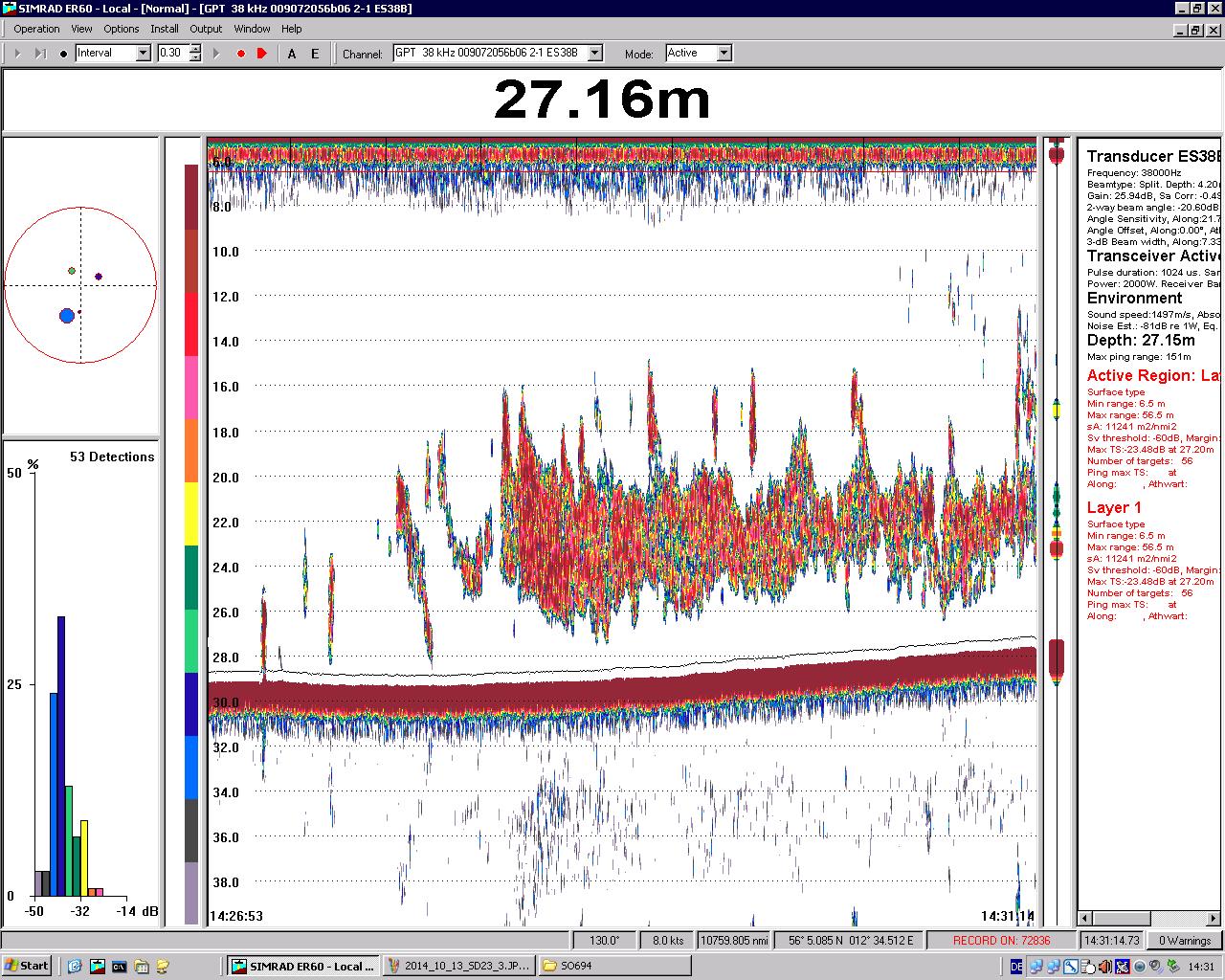
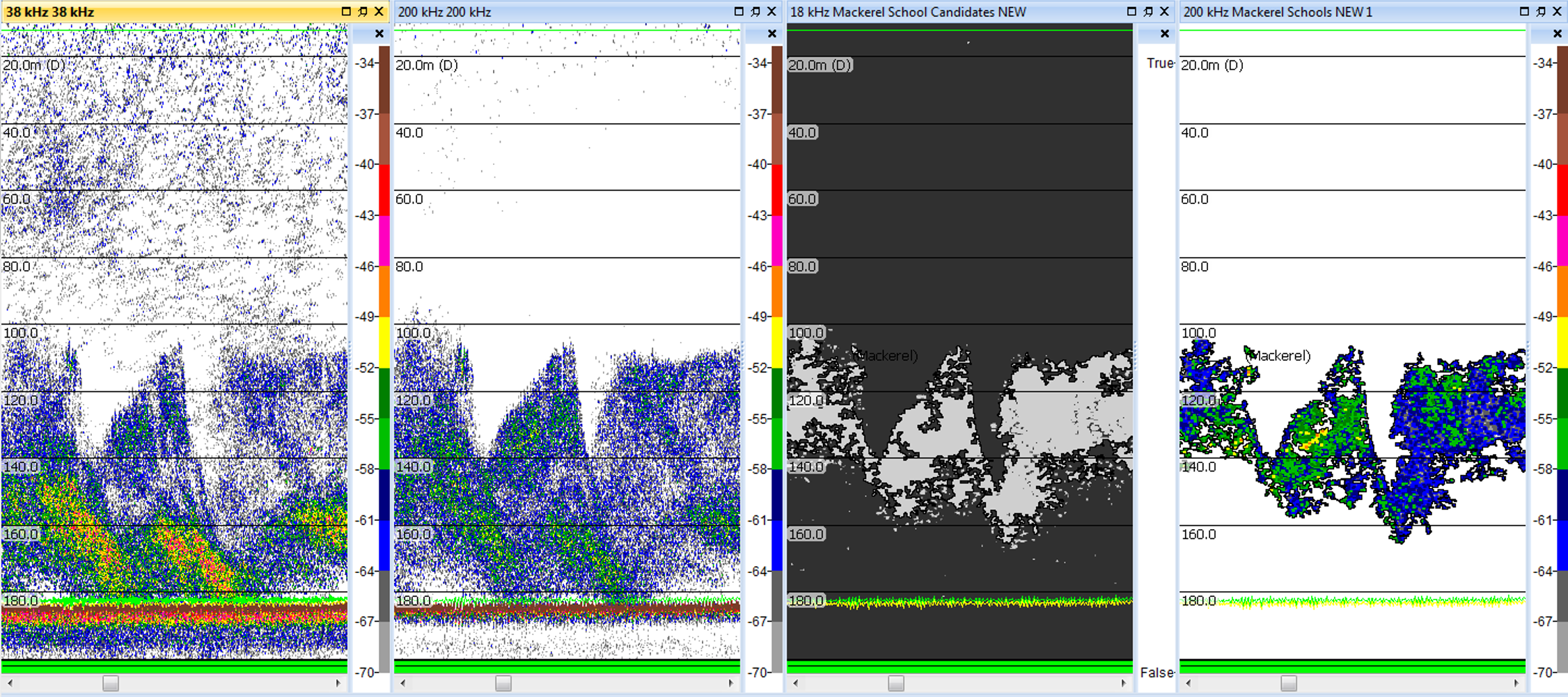
The classification of echos - i.e. the assignment of echos to particular groups of organisms - is based on the acoustic properties of the organisms. Different marine animals reflect different echo signatures. These signatures can not only be represented by different appearances of the shoals on the echosounder screen, but more importantly in the 'frequency response' - a typical echo signature at different frequencies. In our surveys we use echosounders with multiple transducers operating at 38, 70, 120 and 200 kHz
Data and Methods
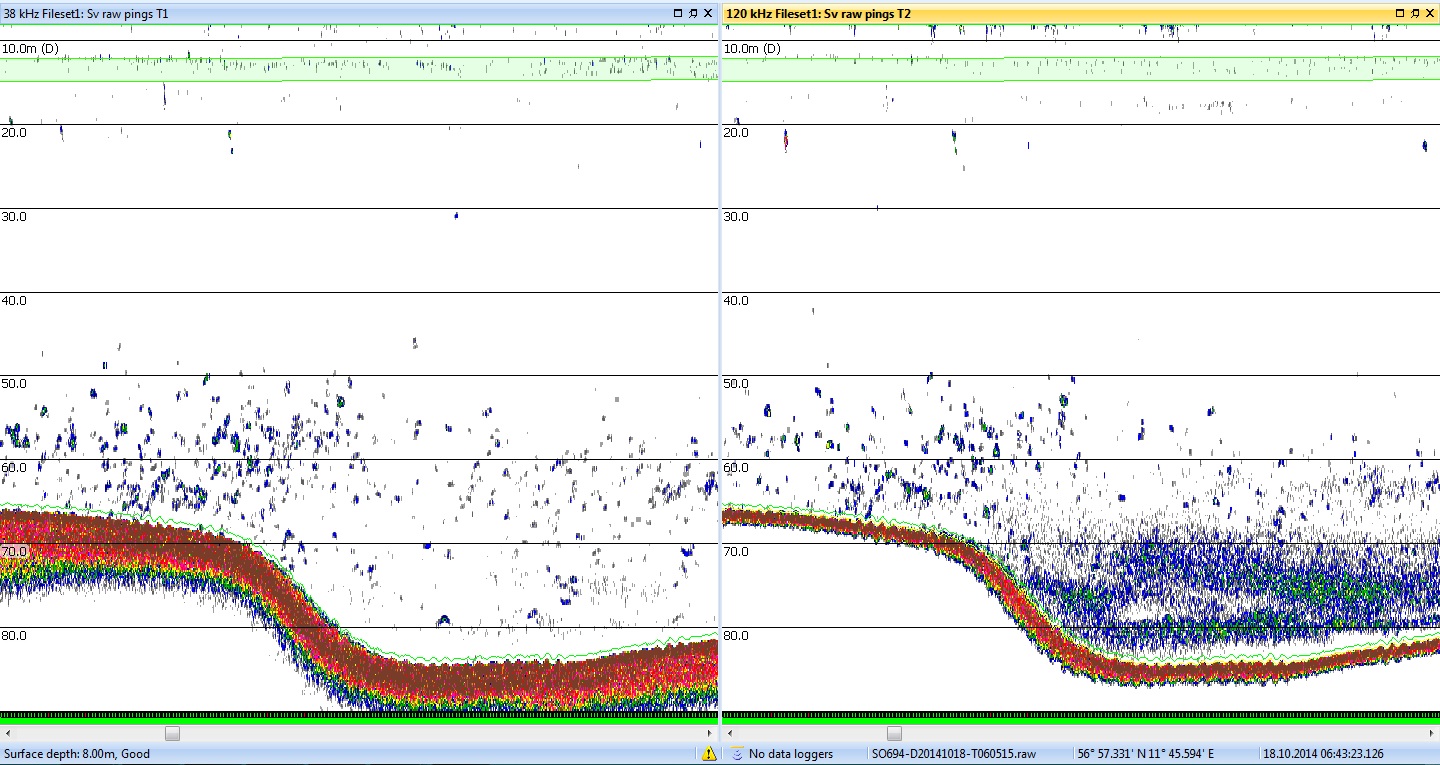
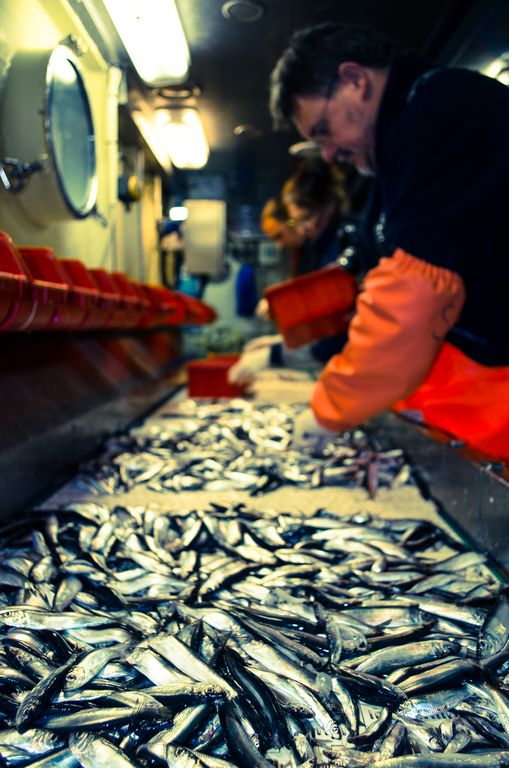
During our research surveys to monitor various pelagic fish stocks, we use modern multi-frequency and broadband echosounders. These echosounders, which need to be calibrated prior to the surveys to ensure that the data are comparable and can be analysed quantitatively, are used to continuously record hydroacoustic data along pre-determined parallel transects in the assigned survey area. The data consists of echoes of different backscatter intensities reflected by different marine organisms and shoals of target fish species. By comparing the echoes registered by echosounders with different operating frequencies (see figure), signals from non-target species can often be filtered out during the analysis, or the echo signatures can be assigned to specific groups of fish, based on the results of our 'Pinging fishes - What goes around comes around' project. Abundance, i.e. the number of fish of a particular species, can be determined in further steps from the echoes that have been summed and integrated over the entire cruisetrack. To do this, it is necessary to assign biological information to the recorded echoes. For this purpose, in addition to recording acoustic data, targeted fishery hauls are carried out with pelagic trawl nets in search of corresponding echo-sounder indications of shoals. The aim is to obtain a representative sample of fish from such a shoal – accordingly, we need to know what the shoals indicated on the echosounder consist of, for example whether they are shoals of sprat or herring - or mixed shoals of these fish. Analysis of these net catches provides data on the length distribution, length/weight ratio, age structure and proportion of mature individuals of the target species.
The echo data are post-processed and according to the acoustic classification and based on further validations and observations from the net catches, the echoes of different shoals or accumulations are partially or completely assigned to the respective target fish species. The total echoes per target species are then integrated. Conversion factors are available for the target fish species, which can be used to calculate the reflected echo intensity from the length of an individual (the so-called target strength). Knowing the species composition of the hydroacoustically recorded fish shoals and the length distribution from the trawl catches, we can convert the acoustic contributions of the different species to the total echo into abundances - i.e. we partition and allocate the echoes to the individual fish as a function of length. This gives us the total number of fish of a particular species in the survey area, known as abundance. With the additional data from net catches on the length-dependent weight of the fish and their respective age or sexual maturity, we can now determine other parameters such as total biomass, spawning stock biomass, age structure, etc. of the stock from the numbers per length class.
Our Research Questions
How can we use hydroacoustic data to determine the abundance and distribution patterns of different marine species? What is the stock status of different (pelagic) fish species?
Can we use acoustic methods to improve the stock assessment of an endangered reef-bounded fish species?
Preliminary Results
The results of our surveys, many of which are coordinated internationally by the International Council for the Exploration of the Sea (ICES), provide estimates of abundance, biomass, age structure and distribution of pelagic fish stocks. These include, for example, herring (Clupea harengus) in the North Sea, Baltic Sea and North Atlantic, sprat (Sprattus sprattus) in the North Sea and Baltic Sea, and redfish (Sebastes mentella) in the North Atlantic. The results are compiled by the ICES working groups (WGIPS, WGBIFS, etc.) for the respective surveys and forwarded to the ICES Herring Assessment Working Group (HAWG).
We also collect such parameters for reef-associated species such as the Australian snapper (Chrysophris auratus) - in collaboration with Australian colleagues.
Links and Downloads
- International Council for the Exploration of the Sea (ICES)
ICES Working Group on Fisheries Acoustics, Science and Technology (WGFAST)
- subproject "SSP - Snapper Science Program
Involved Thünen-Partners
Duration
1.2001 - 12.2027
More Information
Project status:
ongoing
Publikationen
- 0
Gastauer S, Ohman MD (2025) Resolving abrupt frontal gradients in zooplankton community composition and marine snow fields with an autonomous Zooglider. Limnol Oceanogr 70(S1):S102-S120, DOI:10.1002/lno.12642
- 1
Sakinan S, Gastauer S, Auton U, Berg F, Couperus B, Høines A, Holah H, Homrum E í, Jacobsen JA, Kvamme C, Maersk Lusseau S, O'Connell S, O'Donnell C, O'Malley M, Salthaug A, Schaber M, van der Kooij J (2025) Working Group on International Pelagic Surveys (WGIPS). Copenhagen: ICES, 131 p, ICES Sci Rep 7(54), DOI:10.17895/ices.pub.28890038
- 2
Scoulding B, Fairclough DV, Devine C, Jackson G, Lewis P, Waltirck D, West L, Skepper C, Briggs J, Lek E, Yeoh D, Crisafulli BM, Fisher E, Denham A, Mitchell P, Gastauer S (2024) Aerial drones and recreational fish finders: evaluating a low-cost method for surveying fish aggregations. Mar Freshwater Res 75(18):MF24207, DOI:10.1071/MF24207
- 3
Yang Y, Gastauer S, Proud R, Mangeni-Sande R, Everson I, Kayanda RJ, Brierley AS (2024) Modelling and in situ observation of broadband acoustic scattering from the Silver cyprinid (Rastrineobola argentea) in Lake Victoria, East Africa. ICES J Mar Sci 81(7):1385-1398, DOI:10.1093/icesjms/fsad137
- 4
Scoulding B, Gastauer S, Taylor JC, Boswell KM, Fairclough DV, Jackson G, Sullivan P, Shertzer K, Campanella F, Bacheler N, Campbell M, Domokos R, Schobernd Z, Switzer TS, Jarvis N, Crisafulli BM, Untiedt C, Fernandes PG (2023) Estimating abundance of fish associated with structured habitats by combining acoustics and optics. J Appl Ecol 60(7):1274-1285, DOI:10.1111/1365-2664.14412
- 5
Lebourges-Dhaussy A, Ariza A, Diogoul N, Gastauer S, Handegard NO, Jech M, Khodabandeloo B, Bouffant N Le, Lee W-J, Macaulay G, Receveur A, Ryan T, Sakinan S, Schaber M, Stevens J, Sullivan P, Viehmann H, Wall C, Warren J, Wieczorek A, Zydlewski G (2023) Working Group of Fisheries Acoustics, Science and Technology (WGFAST). Copenhagen: ICES, iii, 11 p, ICES Sci Rep 5(90), DOI:10.17895/ices.pub.24190512
- 6
Bairstow F, Gastauer S, Wotherspoon S, Brown CTA, Kawaguchi S, Edwards T, Cox MJ (2022) Krill biomass estimation: Sampling and measurement variability. Front Mar Sci 9:903035, DOI:10.3389/fmars.2022.903035
- 7
Jech M, Schaber M, Gastauer S, Alegria N, Algroy T, Andersen LN, Anderson C, Annasawmy AP, Arendt C, Ariza A, Barbin L, Berger L, Boyra G, Brehmer P, Bristow M, Calise L, Carlsen A, Cermak J, Chawarski J, Chu D, et al (2022) Working Group of Fisheries Acoustics, Science and Technology (WGFAST). Copenhagen: ICES, 93 p, ICES Sci Rep 4(54), DOI:10.17895/ices.pub.20178464
- 8
Gröhsler T, Schaber M (2014) Annex 6: Cruise reports from other acoustic surveys in the area : Annex 6a: Western Baltic acoustic survey ; Survey report for FRV "Solea" ; German Acoustic Autumn Survey (GERAS), 30 September 2013 - 19 October 2013. In: Report of the Working Group of International Pelagic Surveys (WGIPS) ; 20-24 January 2014. Copenhagen: ICES, pp 224-251
- 9
Gröhsler T, Schaber M (2014) Survey Report for FRV "Solea" German Acoustic Autumn Survey (GERAS) 30 September 2013 - 19 October 2013. In: Report of the Baltic International Fish Survey Working Group (WGBIFS) : 24-28 March 2014 ; Gdynia, Poland. Copenhagen: ICES, pp 250-258
- 10
Planque B, Kristinsson K, Astakhov A, Bernreuther M, Bethke E, Drevetnyak K, Nedreaas K, Reinert J, Rolskiy A, Sigurdsson T, Stransky C (2013) Monitoring beaked redfish (Sebastes mentella) in the North Atlantic, current challenges and future prospects. Aquatic Liv Res 26(4):293-306, doi:10.1051/alr/2013062
- 11
Schaber M, Gröhsler T (2013) Survey Report for FRV "Solea" 2-21 October 2012. In: Report of the Baltic International Fish Survey Working Group (WGBIFS) : Annex 8: Cruise reports of acoustic surveys BASS and BIAS in 2012. Copenhagen: ICES, pp 266-289
- 12
Bethke E, Götze E, Planque B (2010) Estimation of the catchability of redfish and blue whiting for survey trawls in the Norwegian Sea. J Appl Ichthyol 26:47-53, DOI:10.1111/j.1439-0426.2010.01446.x