[Translate to English:]
[Translate to English:]
Institute of

FG Forest Genetics

News

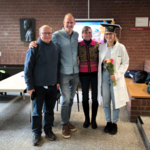
Participation of at the symposium "Elms in a Changing World: Science, Conservation, and Management" at Linnaeus University.

[Translate to English:] Gruppenfoto

Pedunculate oak and sessile oak are important native tree species in Germany, both ecologically and economically. A new study shows that the oak forests in Germany still bear genetic traces of the return migration after the last ice age and provides insights into the gene exchange between the two…

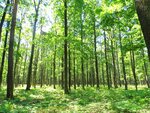
A 150 year old population of sessile oak in Brandenburg, Germany

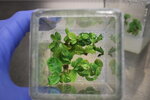
The European beech is the most significant deciduous tree species in Germany. With new protocols, beech trees can be established in in vitro culture and used for vegetative propagation or biotechnological research.

A hand with a blue glove holds a culture cup. A top view into the cup shows small beech seedlings growing inside.

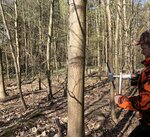
As part of the project 'RubraSelect', the Thünen Institute of Forest Genetics analyzed growth performance and drought stress tolerance of different red oak provenances from Germany and North America. This work provides an important contribution to the production and provision of high-quality forest…

Ein Mann, rechts im Bild, zieht mit Zuwachsbohrer einen Bohrkern aus einer Roteiche

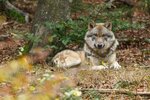
Wolves have been back in Germany for over 20 years. In a recent study, the Thünen Institute presents new tools to answer the question of what the predators feed on.

Wolf

On November 22, 2024, Melina Krautwurst successfully defended her PhD thesis on “Quantitative trait locus (QTL) analysis of ash dieback in Fraxinus excelsior” at the University of Hamburg.


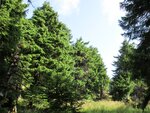
Genetic diversity is a key element of biodiversity. In a new study, scientists from the Thünen Institute of Forest Genetics report the results of a genetic monitoring of two important tree species in Germany, European beech and Norway spruce.

The picture shows one of ten populations of Norway spruce that were selectd for an intensive genetic monitoring, this particular population is located near the summit of mount Brocken in the Harz mountains, Germany

Despite their ecological and economic relevance, very little is known about the natural genetic diversity of Scots pine forests in Germany. A new research project aims at closing this knowledge gap.


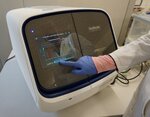
The regulation on deforestation-free supply chains (EU Regulation 2023/1115, known as EUDR) came into force on June 29, 2023 and replaces the EU Timber Regulation (EUTR). The Institute of Forest Genetics in Großhansdorf will support the implementation of the EUDR for wood products.

The "ABI Seqstudio" device is switched on and is operated by a person whose arm can only be seen, wearing blue laboratory gloves.

Once a year, the mathematical and scientific societies organise a parliamentary evening. On 14 November 2023, researchers from various disciplines discussed with members of the Bundestag. Thünen scientist Dr Tobias Brügmann reports on the event.


Scroll to top