
Project
Safe growing media - peat reduction in horticulture
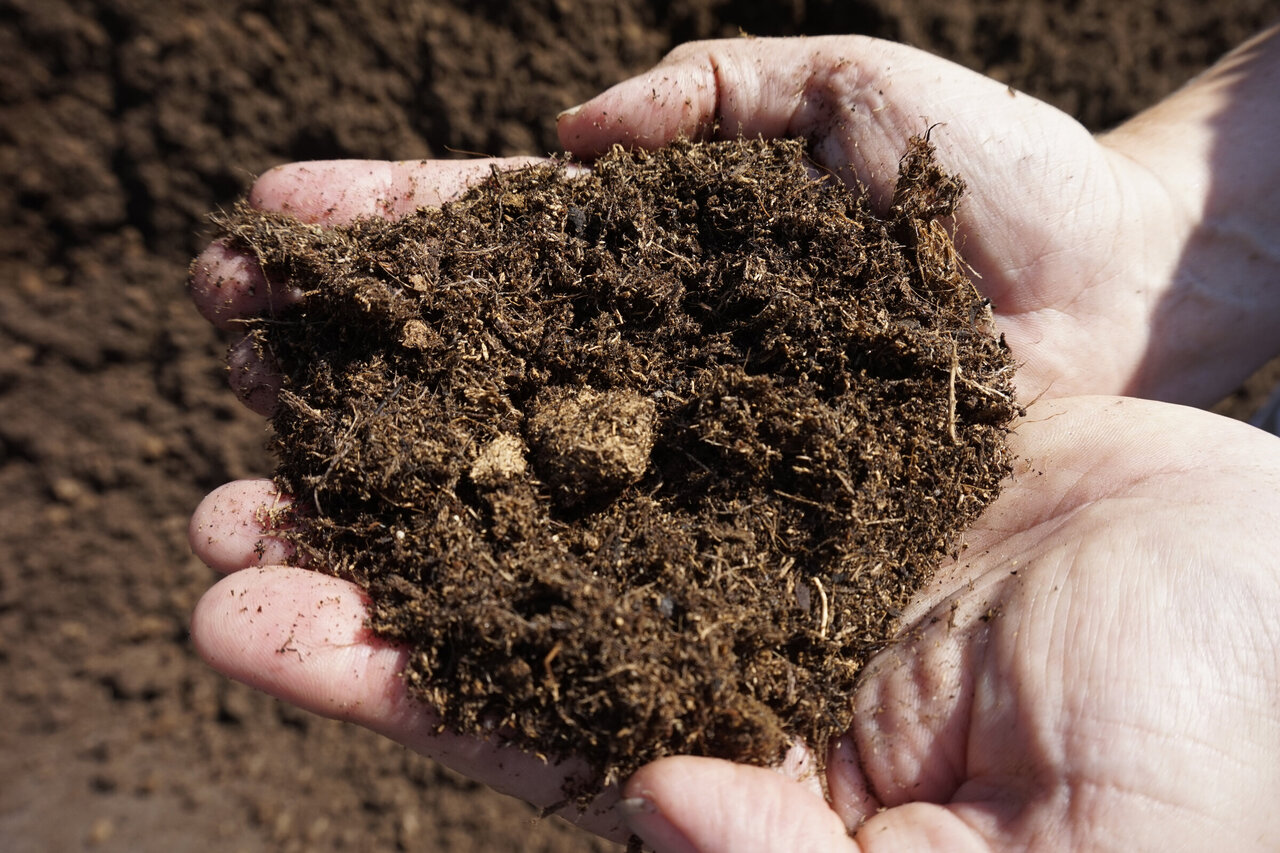
Peat reduction with safe growing media for commercial horticulture
The German 2030 climate protection programme requires the horticultural sector to minimise the use of peat as growing media. To achieve this, the various horticultural branches need sustainable solutions that effectively reduce CO2 emissions and enable the production of high-quality plants in an economically sustainable manner. The ToSuGa project focusses on holistically investigating and evaluating the effects of using peat-reduced substrates.
Background and Objective
The use of organic peat substitutes in horticultural substrates not only brings about chemical and physical changes, but the incorporated substances also significantly influence the composition and function of biological processes in the substrate. Against this background, horticultural production systems must be adapted to characteristics of the new substrates. The change of substrates has economic and ecological as well as agronomic effects. With the help of a holistic assessment, horticultural businesses can be given recommendations for switching to peat-reduced substrates.
The objectives of workpackage 5 are twofold: The production systems from five horticultural production branches are to be evaluated both economically and ecologically when using peat-reduced growing media while using the status quo of the currently used substrates as a standard. One example crop is analyzed for each of the horticultural branches. In the economic evaluation, costs of production and gross margins of the production systems are used as indicators. At the same time, a life cycle assessment is carried out using a standardised procedure. Both assessments are conducted in close coordination with a shared data base and finally integrated so that a joint interpretation of the results is possible. The life cycle assessment is carried out by Erfurt University of Applied Sciences.
Approach
In the first step, horticultural businesses throughout Germany with typical production systems in soft fruit, potted herbs, container roses, cyclamen and lettuce cultivation are selected and interviewed using a standardised questionnaire. With this data, a typical production system is modelled and subsequently validated in focus group discussions involving farmers and technical advisors. Based on this, scenarios with peat-reduced substrate use are analysed and changes in the contribution margin and in the CO2 balance are calculated. Based on the results, recommendations for practical implementations will be derived.
Thünen-Contact

Involved Thünen-Partners
Involved external Thünen-Partners
- Julius Kühn-Institut - Bundesforschungsinstitut für Kulturpflanzen (JKI)
(Quedlinburg, Braunschweig, Groß Lüsewitz, Kleinmachnow, Deutschland)
Funding Body
-
Fachagentur Nachwachsende Rohstoffe e.V. (FNR)
(national, öffentlich)
Duration
12.2024 - 1.2027
More Information
Project status:
ongoing
Publications to the Project
- 0
Ahrend AH, Tergast HT (2025) Kosten oder Nutzen für Milchviehbetriebe? Land & Forst 178(32):14-16
- 1
Ahrend AH, Tergast HT (2025) Milch mit weniger Emissionen - zu welchem Preis? Innovation DSV Mag(3 & 4):10-11
- 2
Ahrend AH, Tergast HT (2025) Molkereien wollen eine Klimabilanzierung : Wie verteilen sich Kosten und Nutzen Aspekte für die Milchviehbetriebe? Bauernbl Schleswig-Holstein Hamburg 79(37):52-54
- 3
Ahrend AH, Tergast HT (2025) Was kosten Klimaschutzmaßnahmen den Milchviehbetrieb? Rhein Bauernzeitg 79(5):28-30
- 4
Ahrend AH, Tergast HT (2025) Weniger Kohlendioxid : Klimaschutz in der Milchviehhaltung. Bauernzeit 66(25):42-44
- 5
Ahrend AH, Tergast HT (2024) Emissionsminderung : Was kostet das den Betrieb? DLG Mitt(12):36-39
- 6
Lassen B, Danne M, Gentz M (2023) Gut geschätzt ist halb gemessen. Allgäuer Bauernbl 91(18):23-25