![[Translate to English:]](/media/_processed_/6/4/csm_titel_CO2Kampagne8_afeea2273e.png "[Translate to English:]")
![[Translate to English:]](/media/_processed_/4/1/csm_titel_93px_CO2Kampagne8_9b0f3354d4.png "[Translate to English:]")
Project
Carbon cycling in different fen paludicultures – CaCyPal
Carbon cycling in different fen paludicultures – Short and long-term stability of sequestered C under different future groundwater level scenarios
We are tracking carbon in fen paludicultures…
Background and Objective
The majority of peatlands in Germany have been drained for agriculture and thus emit large amounts of greenhouse gases (GHG) due to peat mineralization. In 2023, organic soils contributed approximately 6.9% (UBA, 2025) to Germany's total national greenhouse gas emissions.
Paludiculture, the agricultural or forestry use of rewetted peatlands, is considered one of the most promising measures for mitigating greenhouse gas emissions from organic soils.
Recent studies show a high carbon sequestration potential (C) for managed paludiculture. Therefore, converting drained arable land to fen paludiculture can be an effective, nature-based approach for climate mitigation. However, the long-term stability of the measured high carbon dioxide (CO2) uptake is currently largely unclear due to the lack of long-term studies. Limited knowledge about the long-term effects of rewetting and paludiculture on greenhouse gas mitigation currently hampers their inclusion in national inventories, thus delaying mitigation measures and policy decisions. In addition to the greenhouse gas mitigation potential, the resilience of paludicultures to the impacts of climate change, particularly droughts, must also be ensured. Therefore, there is an urgent need for long-term studies and a deeper understanding of the C cycle and the mechanisms of C sequestration for different paludicultures. The aim of the proposed project is to determine the fate of newly assimilated atmospheric CO2 in different C pools. Furthermore, the stability and potential risk of remobilization of recently stored C under continuously wet conditions compared to climate-induced droughts for different paludiculture types will be assessed.
Target Group
Science, regulating authorities, farming advisors and extension services, agricultural practice
Approach
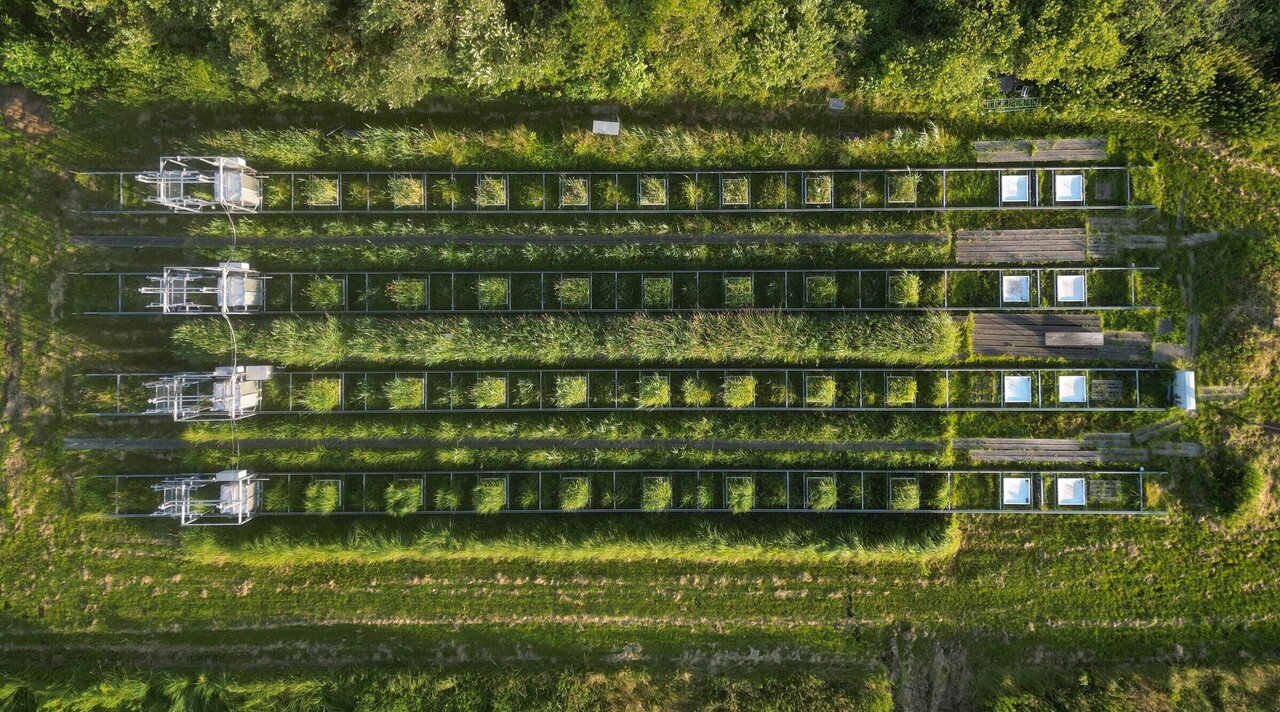
Under field conditions, plant CO2 uptake, C transfer, and C metabolism in the plant-soil-atmosphere continuum will be quantified over different time periods. For this purpose, three paludiculture species (Carex acutiformis, Phalaris arundinacea, Typha latifolia) will be labeled with 13C-enriched CO2 during the growing season in 2026. The labeled carbon can then be tracked in the various pools and processes over the short and long term.
All field experiments will be conducted on the HSWT-PSC experimental site. A novel, fully automated, chamber-based GHG measurement system will be used for high-frequency and precise greenhouse gas and isotope measurements in CO2 and methane (CH4). Plant and soil samples will also be analyzed.
This is followed by a consolidated evaluation of the results from the experimental and modelling work areas and the transfer of knowledge from the results to consulting, practice, authorities and politics.
Thünen-Contact

Involved Thünen-Partners
Involved external Thünen-Partners
- Hochschule Weihenstephan-Triesdorf
(Weihenstephan, Deutschland)
Funding Body
-
Deutsche Forschungsgemeinschaft (DFG)
(national, öffentlich)
Duration
8.2025 - 7.2028
More Information
Project status:
ongoing