![[Translate to English:]](/media/_processed_/6/4/csm_titel_CO2Kampagne8_afeea2273e.png "[Translate to English:]")
![[Translate to English:]](/media/_processed_/4/1/csm_titel_93px_CO2Kampagne8_9b0f3354d4.png "[Translate to English:]")
![[Translate to English:]](/media/_processed_/4/a/csm_156_DSC_1305_50__90a9967ab6.jpg "[Translate to English:]")
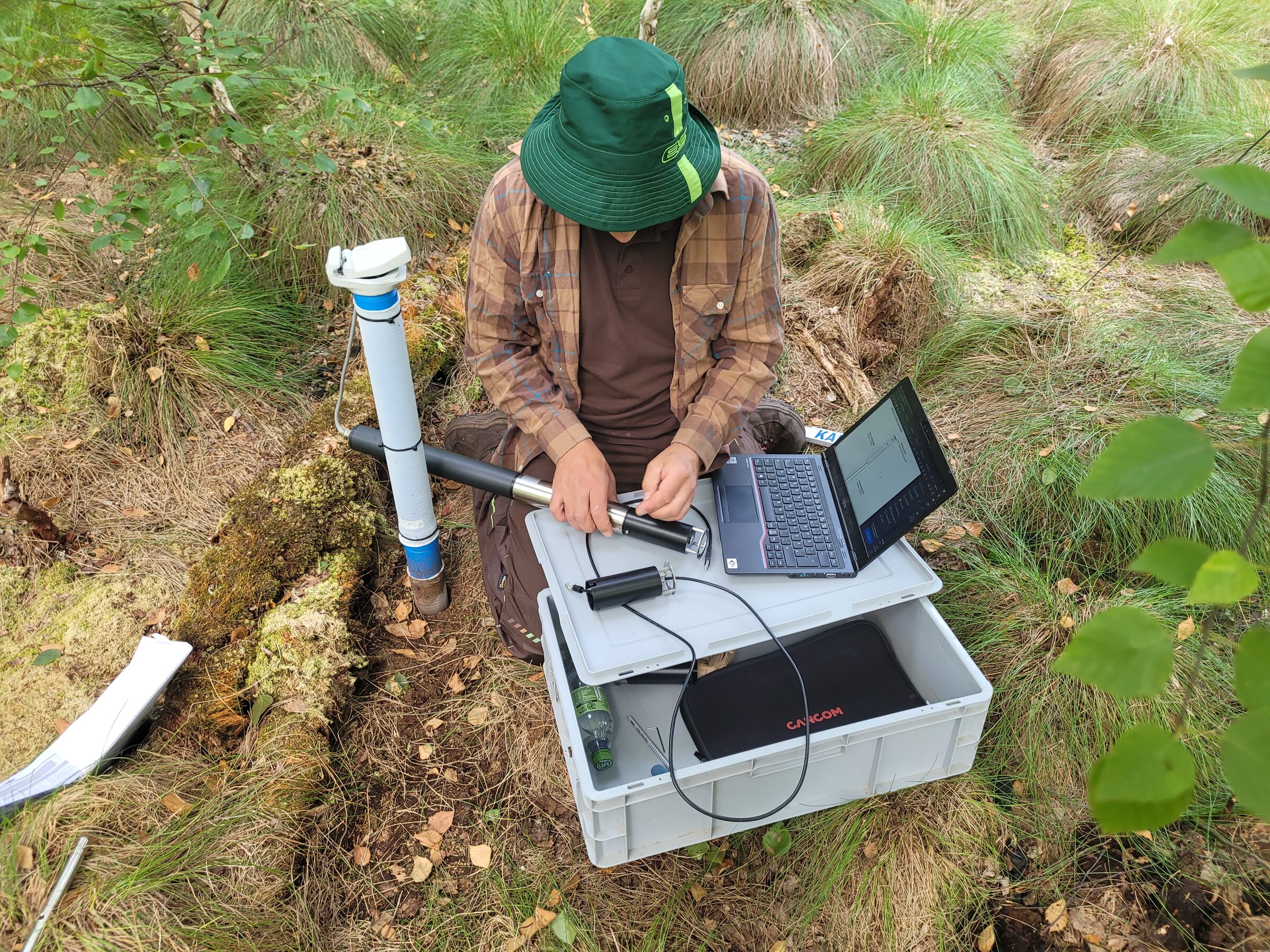
Braunschweig/Eberswalde (23 October 2025). A network of 155 measuring stations now spans Germany's peatlands. They were set up over the past five years by scientists from the Thünen Institute of Climate-Smart Agriculture and the Thünen Institute of Forest Ecosystems on behalf of the Federal Ministry of Agriculture, Food and Regional Identity (BMLEH). Today, Thursday, 23 October 2025, the report on the build-up of the monitoring network was handed over to State Secretary Prof. Dr. Dr. Markus Schick in Berlin.
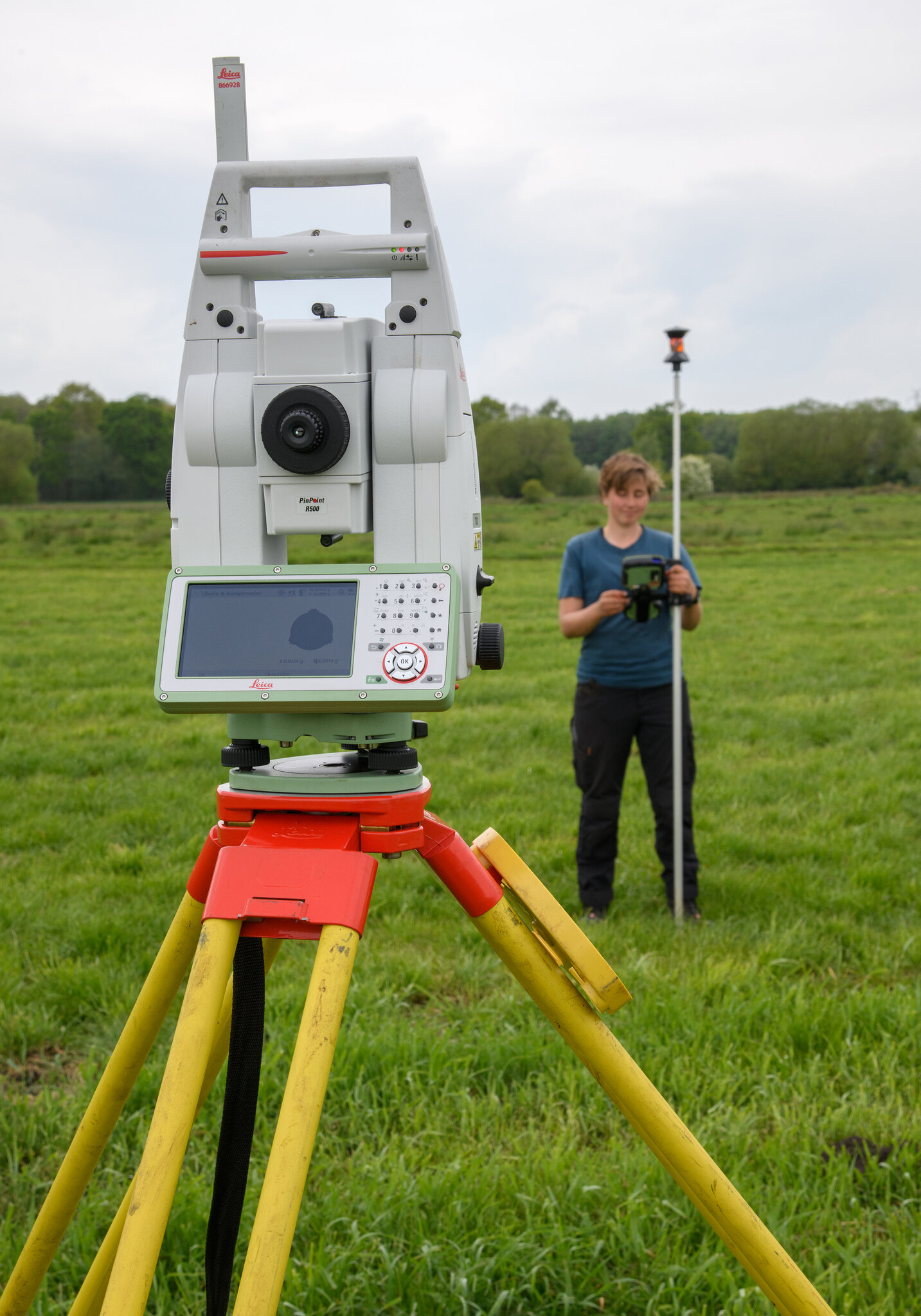
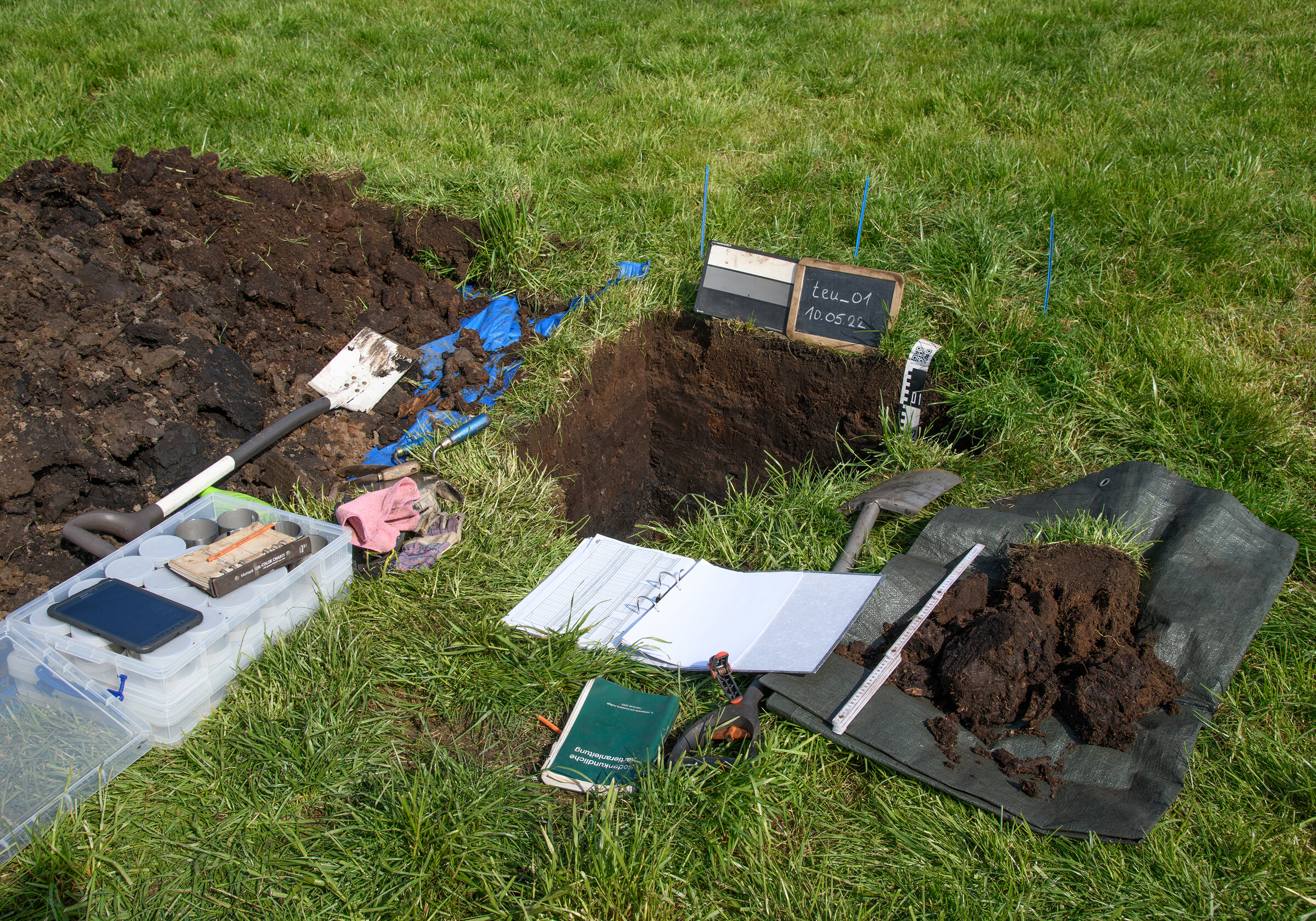
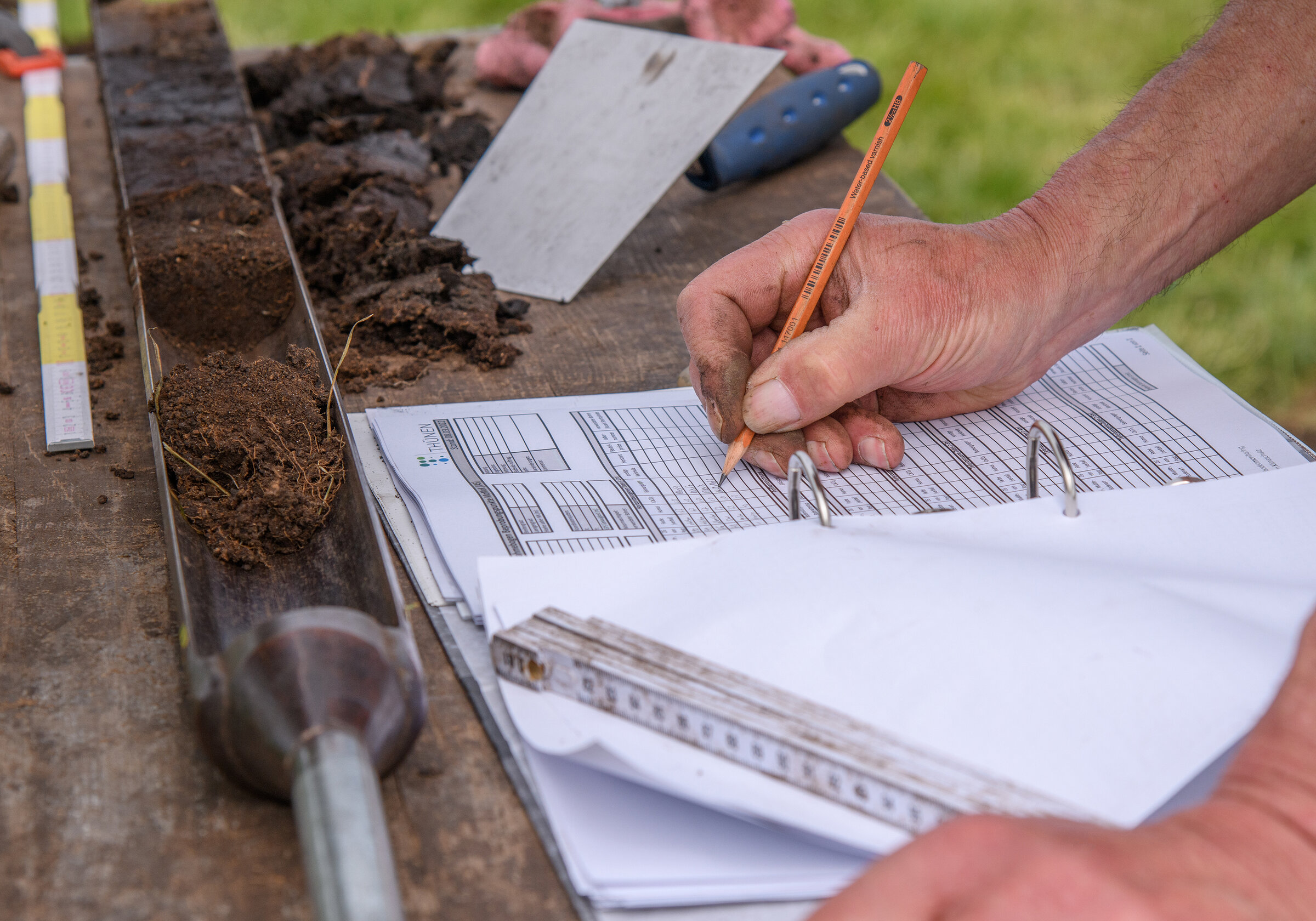
With the help of 118 monitoring areas in open land and 37 areas in forests, the condition of peatland soils can now be assessed on a long-term and uniform basis. The areas cover the most important combinations of land use in Germany, such as arable land and grassland, as well as peatland soil types. Innovative forms of peatland soil use, such as raising the water level, are also taken into account. Further areas will be added in future as required. "We record carbon stocks and terrain elevations. These form the basis for evaluating various measures to reduce greenhouse gas emissions," explains Dr Stefan Frank, who is responsible for the project MoMoK at the Thünen Institute of Climate-Smart Agriculture in Braunschweig. Water levels, vegetation and management are also recorded because these factors control the carbon balance of the peat soil. "This also significantly improves our database for models used to derive greenhouse gas emissions across Germany," says Stefan Frank.
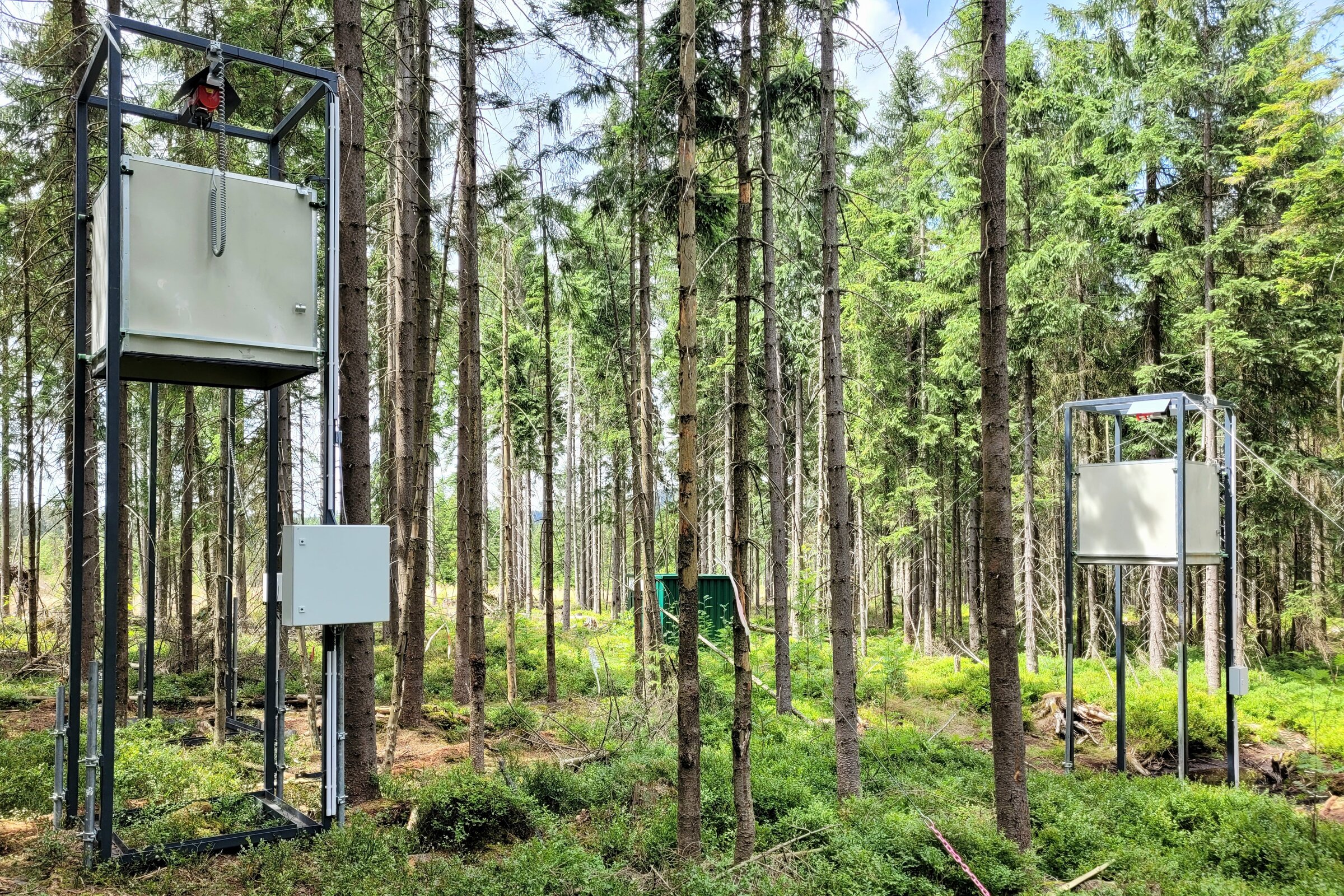
The Thünen Institute of Forest Ecosystems has included forested peatlands in the peat soil monitoring programme. There are currently no reliable emission factors for these. Two intensive measurement sites have therefore been set up to analyse greenhouse gas emissions from forested peats during rewetting. Carbon dioxide, methane and nitrogen emissions from the peat are measured there around the clock. With this comprehensive collection of data, the effectiveness of climate protection measures in the forest can be assessed in future.
Dry peatlands emit greenhouse gases
There are currently around 1.93 million hectares of peatland (short for peatland and other organic soils) across Germany, mainly in the north and south-east of the country. This corresponds to an area share of 5.3 per cent. Moist peatlands store large amounts of organic carbon and are therefore an important sink for the greenhouse gas carbon dioxide. A constant water level protects the peat body from decomposition by microbes. In drained peatlands, on the other hand, the peat body is constantly being broken down. This produces greenhouse gases that are harmful to the climate. 92 per cent of peatlands in Germany are drained. They are used for agriculture and forestry, among other things. With 53 million tonnes of carbon dioxide equivalents, they are responsible for around seven percent of all annual emissions in Germany. An average organic carbon stock of 1,066 tonnes per hectare has been measured on the 118 monitoring areas in open land, which includes arable land and grassland.
The situation is similar in the forests: Forested peats store an average of 1,242 tonnes of carbon per hectare, most of it in the soil. In total, 2.4 per cent of all forests are located on peat soils. "However, the range of carbon stocks is quite wide, from 103 to just under 3,000 tonnes of carbon per hectare," says Dr Cornelius Oertel, who set up the monitoring areas in the forest at the Thünen Institute of Forest Ecosystems. And: "The shallower a peat is, the more important is the forest above for the carbon storage. The most carbon in the tree population is found in spruce and alder stands. The large amount of stored carbon once again emphasises the importance of peat soils for climate protection.
During the work on peatland soil monitoring, the so-called backdrop of organic soils was also updated. Together with the now also established weather-dependent modelling of water levels in peat soils, greenhouse gas emissions from peat soils can now be calculated more accurately. Initial evaluations show that peat soils in Germany store at least 1.6 billion tonnes of organic carbon. For comparison: according to the most recent national forest inventory, around 1.2 billion tonnes of carbon are stored in the above- and below-ground biomass of the forest.